Introduction
In today’s highly competitive steel manufacturing industry, productivity, precision, and durability are essential for achieving consistent rolling performance. One of the most critical components that directly impacts rolling mill efficiency is the Tungsten Carbide (TC) Roll Ring. Designed to withstand extreme pressure, high temperatures, and continuous wear, TC rings have become the preferred choice for modern rolling mills around the world.
Compared to conventional steel rolls, tungsten carbide roll rings offer significantly longer service life, superior dimensional accuracy, and reduced maintenance costs. These advantages help manufacturers increase production while maintaining excellent product quality.
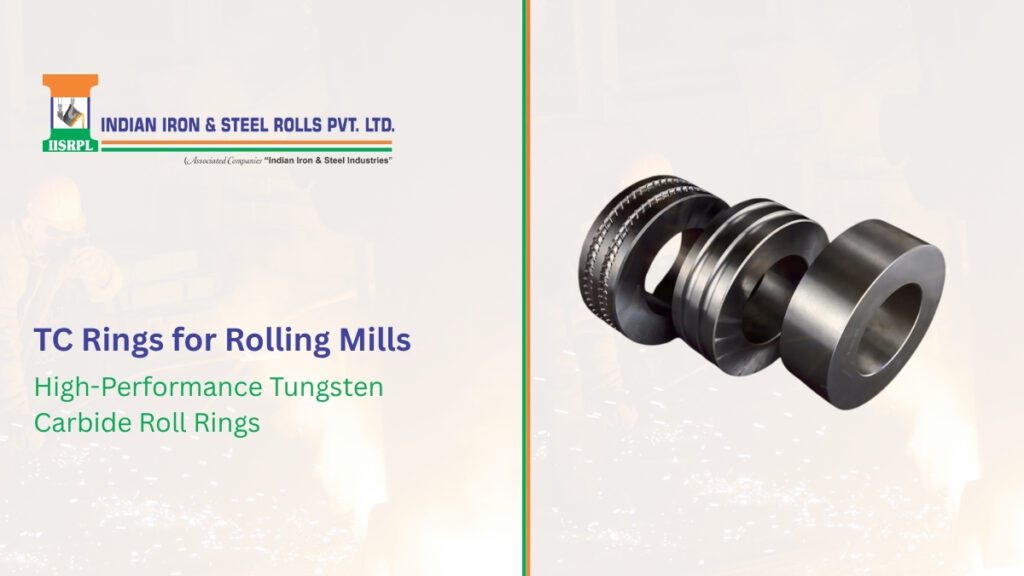
This blog explores what TC rings are, their benefits, applications, manufacturing process, and why they are indispensable in modern rolling mill operations.
What Are TC Rings?
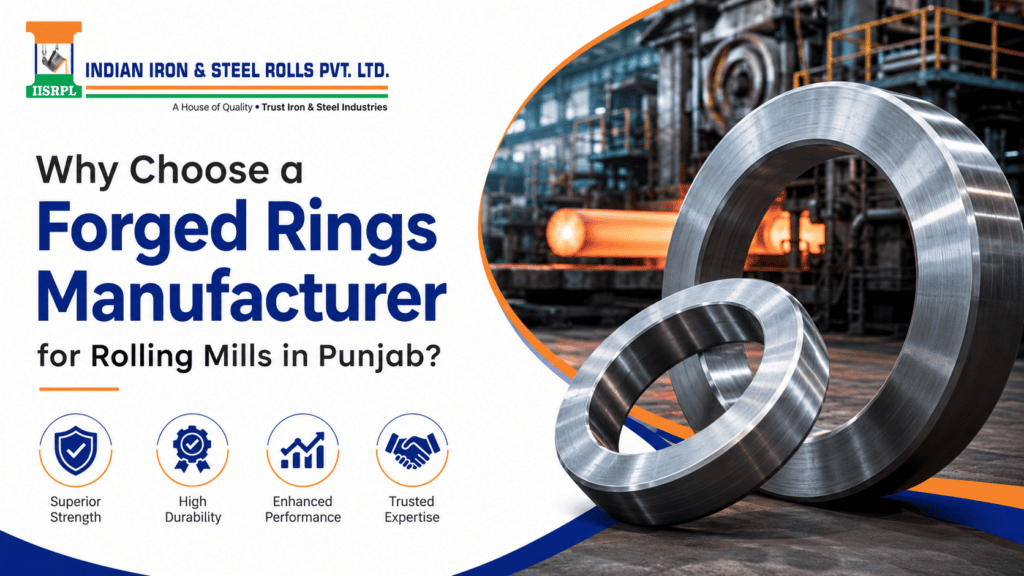
TC Rings, also known as Tungsten Carbide Roll Rings, are precision-engineered rings manufactured from tungsten carbide and cobalt binder materials. These rings are mounted on rolling mill shafts and are responsible for shaping and reducing the diameter of steel bars, rods, wire, and other metal products during the rolling process.
Tungsten carbide is one of the hardest engineering materials available, making it exceptionally resistant to wear, deformation, and impact. This allows TC rings to maintain their profile even after extended production cycles.
Why Rolling Mills Choose Tungsten Carbide Rings
Rolling mills operate under harsh conditions involving:
- High rolling pressure
- Continuous friction
- Elevated temperatures
- Abrasive steel scale
- High production speeds
Traditional steel rolls wear rapidly under these conditions, leading to frequent roll changes, production downtime, and inconsistent product dimensions.
TC rings overcome these challenges by providing exceptional hardness and wear resistance, enabling longer uninterrupted production runs.
Key Features of TC Roll Rings
Exceptional Wear Resistance
The extremely high hardness of tungsten carbide provides outstanding resistance against abrasive wear, allowing the rings to retain their original profile for much longer than conventional steel rolls.
High Compressive Strength
TC rings can withstand enormous rolling forces without cracking or permanent deformation, making them suitable for heavy-duty industrial applications.
Superior Surface Finish
Because the roll profile remains consistent throughout its service life, TC rings produce steel products with smoother surfaces and better dimensional accuracy.
Thermal Stability
Rolling generates considerable heat. Tungsten carbide maintains its mechanical properties even at elevated temperatures, ensuring stable rolling performance.
Corrosion Resistance
TC rings resist oxidation and corrosion better than many traditional roll materials, increasing their durability in demanding production environments.
Advantages of Using TC Rings
Longer Service Life
One of the biggest advantages is the significantly longer operational life compared to alloy steel rolls. In many applications, TC rings last several times longer.
Reduced Downtime
Fewer roll changes mean increased machine availability and higher production output.
Lower Production Costs
Although the initial investment may be higher, the reduced maintenance, fewer replacements, and longer service life substantially lower the total operating cost.
Improved Product Quality
Consistent groove geometry ensures:
- Better dimensional accuracy
- Improved roundness
- Reduced surface defects
- Better tolerance control
Increased Productivity
Rolling mills can operate for extended periods without interruptions, leading to higher production efficiency.
Applications of TC Rings
Tungsten carbide roll rings are widely used in various rolling mill operations, including:
Wire Rod Mills
Used for high-speed rolling of wire rods where dimensional precision is essential.
Bar Rolling Mills
Ideal for producing reinforcement bars, round bars, and engineering steel products.
Section Mills
Suitable for manufacturing structural steel sections with consistent dimensions.
Seamless Tube Mills
Used during tube production to ensure accurate sizing and excellent surface quality.
Stainless Steel Rolling
Excellent wear resistance makes TC rings highly effective when rolling stainless steel and other hard alloys.
Non-Ferrous Metal Rolling
TC rings are also used in rolling copper, brass, aluminum, and various specialty alloys.
Manufacturing Process of TC Rings
Producing high-quality tungsten carbide rings involves advanced powder metallurgy techniques.
1. Raw Material Selection
Premium tungsten carbide powder is blended with carefully controlled cobalt binder content.
2. Powder Mixing
The powder mixture is uniformly blended to ensure consistent material properties.
3. Pressing
The powder is compacted into ring-shaped molds using high-pressure equipment.
4. Sintering
The compacted rings are sintered at temperatures above 1,400°C, producing an extremely dense and hard material.
5. Precision Grinding
Computer-controlled grinding machines create highly accurate groove profiles and tight dimensional tolerances.
6. Inspection
Each ring undergoes strict quality checks, including:
- Hardness testing
- Density measurement
- Dimensional inspection
- Surface finish verification
- Crack detection
Materials Used in TC Roll Rings
The performance of a TC ring depends largely on its material composition.
Common grades include:
- Fine-grain tungsten carbide
- Medium-grain tungsten carbide
- Ultra-fine tungsten carbide
- Cobalt-bonded carbide
- Nickel-bonded carbide for corrosion-resistant applications
Material selection depends on:
- Rolling speed
- Product type
- Steel grade
- Production volume
- Rolling temperature
How TC Rings Improve Rolling Mill Performance
Modern rolling mills require components that support continuous production without sacrificing quality.
TC rings help achieve this by:
- Minimizing groove wear
- Reducing roll replacement frequency
- Improving dimensional consistency
- Lowering maintenance costs
- Enhancing product surface quality
- Increasing production efficiency
- Reducing scrap generation
These benefits contribute to higher profitability and more reliable operations.
Maintenance Tips for TC Rings
Proper maintenance extends service life and preserves performance.
Recommended practices include:
- Handle rings carefully to avoid impact damage.
- Inspect grooves regularly for signs of wear or chipping.
- Clean rings after production to remove scale and debris.
- Store rings in a dry, protected environment.
- Use appropriate mounting procedures.
- Follow recommended grinding and reconditioning guidelines.
Routine inspection helps identify minor issues before they affect production.
Choosing the Right TC Ring Supplier
Selecting a trusted manufacturer is essential for obtaining consistent product quality.
Consider suppliers that offer:
- High-purity raw materials
- Precision CNC grinding
- Custom groove profiles
- Strict quality control
- Technical support
- Competitive pricing
- On-time delivery
- Industry certifications
A reliable supplier can also assist with material selection based on your rolling conditions and production goals.
Future of Tungsten Carbide Roll Rings
As rolling mills continue to increase production speeds and quality standards, the demand for advanced TC rings continues to grow.
Innovations include:
- Nano-grain carbide materials
- Improved wear-resistant coatings
- Enhanced fracture toughness
- Precision groove optimization
- Smart manufacturing and quality monitoring
These developments are expected to deliver even longer service life and greater production efficiency.
Conclusion
Tungsten Carbide (TC) Roll Rings have transformed modern rolling mill operations by providing unmatched wear resistance, exceptional strength, and outstanding dimensional stability. Their ability to withstand demanding operating conditions while delivering consistent product quality makes them an essential component in steel and non-ferrous metal manufacturing.
Although the initial investment is higher than traditional steel rolls, the long-term benefits—including longer service life, reduced downtime, lower maintenance costs, and improved productivity—make TC rings a cost-effective solution for rolling mills seeking reliable, high-performance operations.
Whether used in wire rod mills, bar mills, section mills, or seamless tube production, high-quality TC rings contribute significantly to operational efficiency and product excellence.
Frequently Asked Questions (FAQs)
What are TC rings used for in rolling mills?
TC rings are used to shape and size steel bars, wire rods, tubes, and other metal products while providing excellent wear resistance and dimensional accuracy.
Why are tungsten carbide roll rings better than steel rolls?
They offer much greater hardness, longer service life, better wear resistance, improved surface finish, and reduced downtime.
Can TC rings be customized?
Yes. Manufacturers can produce custom sizes, groove profiles, bore dimensions, and carbide grades to meet specific rolling requirements.
How long do TC rings last?
Their lifespan depends on the application, material grade, rolling conditions, and maintenance practices, but they generally last several times longer than conventional steel rolls.
Which industries use tungsten carbide roll rings?
Steel manufacturing, stainless steel production, wire rod mills, tube mills, structural steel plants, and non-ferrous metal processing industries all rely on TC roll rings.