In modern steel manufacturing, rolling mills require components that can withstand extreme pressure, temperature, wear, and repeated mechanical stress. High-Speed Steel (HSS) cast rolls have emerged as an advanced solution for demanding rolling applications because of their excellent wear resistance, hardness, thermal stability, and ability to maintain a high-quality roll surface over extended operating periods.
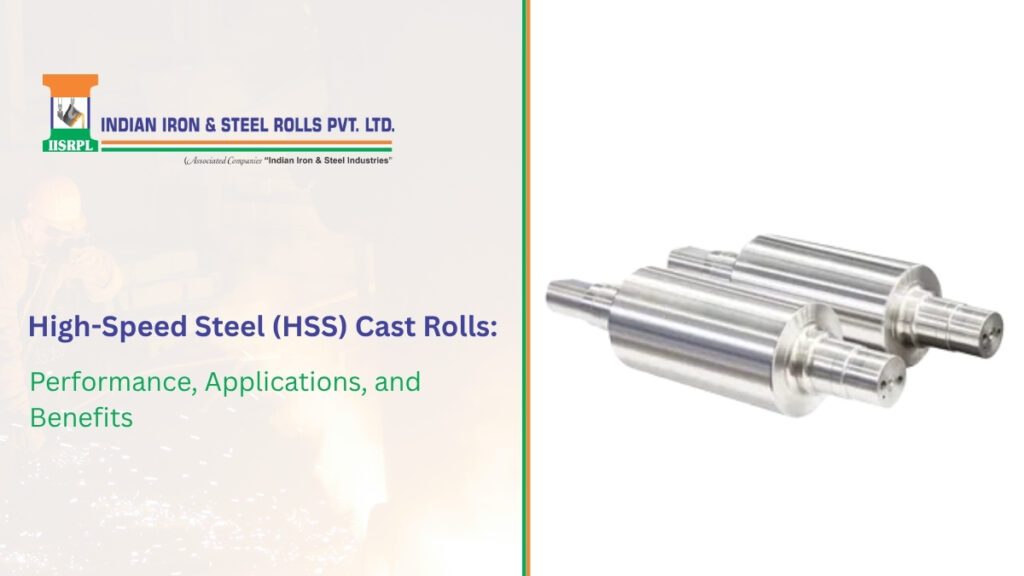
As steel producers continue to focus on higher productivity, improved strip quality, and lower maintenance costs, selecting the right roll material has become increasingly important. HSS cast rolls are widely used in demanding finishing applications where conventional roll materials may not provide the required combination of durability and surface performance.
What Are High-Speed Steel (HSS) Cast Rolls?
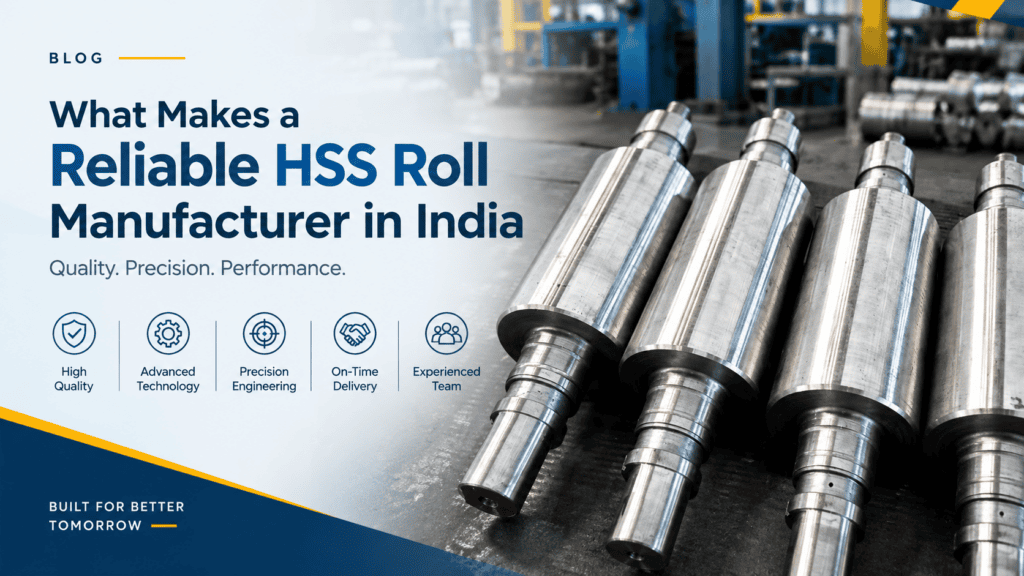
High-Speed Steel (HSS) cast rolls are rolling mill rolls manufactured using high-speed steel alloys containing carefully controlled amounts of alloying elements such as carbon, chromium, molybdenum, tungsten, vanadium, and sometimes niobium or other elements.
The alloy composition and casting process are designed to produce a roll with a hard, wear-resistant working layer while maintaining sufficient toughness and mechanical strength. Depending on the manufacturing technology, HSS rolls may be produced using centrifugal casting or other specialized casting processes.
The resulting microstructure generally contains hard carbides distributed within a metallic matrix. These carbides provide exceptional resistance to abrasive and adhesive wear, while the matrix contributes to toughness and overall mechanical performance.
Why Are HSS Cast Rolls Important in Rolling Mills?
The performance of a rolling mill roll directly affects productivity, product quality, roll consumption, and maintenance requirements.
During hot or cold rolling operations, rolls are exposed to:
- High contact pressure
- Elevated temperatures
- Thermal cycling
- Mechanical shock
- Abrasive wear
- Surface fatigue
- Oxidation
- Repeated bending and loading
Traditional roll materials can perform effectively in many applications, but increasingly demanding rolling conditions require materials with superior wear resistance and thermal performance.
HSS cast rolls are designed to address these challenges. Their hard working surface can retain its profile and roughness characteristics for longer periods, potentially allowing mills to achieve longer campaigns and more consistent strip quality.
Key Features of HSS Cast Rolls
1. Excellent Wear Resistance
One of the most important advantages of HSS cast rolls is their high resistance to wear.
The presence of hard alloy carbides helps protect the roll surface against material removal during repeated rolling operations. Improved wear resistance can help maintain roll geometry and reduce the frequency of roll changes or grinding.
This is particularly valuable in finishing stands, where maintaining a consistent roll profile is critical to achieving the desired strip dimensions and surface characteristics.
2. High Surface Hardness
HSS rolls typically offer significantly higher working-layer hardness than many conventional roll materials.
High hardness helps the roll resist surface damage and deformation under demanding operating conditions. It also contributes to improved resistance against wear mechanisms that can gradually change the roll profile.
3. Improved Thermal Performance
Hot rolling exposes rolls to repeated temperature changes. The roll surface may experience rapid heating during contact with the hot strip followed by cooling during the remainder of the rotation.
HSS roll materials are engineered to perform under these thermal conditions. Proper alloy design, heat treatment, and manufacturing quality are essential for maintaining resistance to thermal fatigue and other temperature-related damage.
4. Stable Roll Profile
Maintaining the correct roll profile is essential for controlling strip thickness, flatness, and dimensional accuracy.
Because HSS cast rolls have strong resistance to wear, they can maintain their working profile more effectively during extended campaigns. This can contribute to more consistent rolling performance and product quality.
5. Longer Service Life
A major reason for using HSS cast rolls is their potential to provide longer service life compared with conventional roll grades in suitable applications.
Longer service life can reduce the frequency of roll replacement, minimize grinding requirements, and improve mill availability.
Manufacturing Process of HSS Cast Rolls
The performance of an HSS cast roll depends not only on its chemical composition but also on its manufacturing process.
A typical manufacturing route may involve several carefully controlled stages.
Alloy Preparation
Selected raw materials and alloying elements are melted according to a specified chemical composition. The composition is controlled to achieve the required balance between hardness, carbide formation, toughness, and thermal performance.
Casting
The molten alloy is cast using a controlled casting process. Centrifugal casting is commonly associated with composite roll manufacturing because it can help produce a hard working layer with controlled metallurgical characteristics.
Solidification and Microstructure Development
Controlled solidification is critical. The distribution, size, morphology, and type of carbides influence the final wear resistance and mechanical behavior of the roll.
Poorly controlled carbide distribution can negatively affect toughness and service performance. Therefore, metallurgical control is a critical part of HSS roll production.
Heat Treatment
Heat treatment is used to develop the desired matrix structure and mechanical properties.
Parameters such as heating temperature, holding time, cooling rate, and subsequent tempering must be carefully controlled. The exact treatment depends on the alloy grade and intended application.
Machining and Grinding
After heat treatment, the roll is machined and ground to the required dimensions, profile, surface finish, and tolerances.
Precision grinding is particularly important because the finished roll must meet strict requirements for geometry and surface quality.
Quality Inspection
Finished HSS cast rolls can undergo dimensional, metallurgical, hardness, and non-destructive inspections.
Depending on the application, inspection may include ultrasonic testing, surface inspection, hardness measurement, microstructural evaluation, and dimensional verification.
Applications of HSS Cast Rolls
HSS cast rolls are primarily used in applications where high wear resistance and surface performance are required.
Hot Strip Mills
Hot strip mills are one of the most important applications for HSS rolls. Finishing stands operate under demanding conditions where roll wear and surface deterioration can affect strip quality.
HSS rolls can provide improved resistance to wear and help maintain a stable working surface during longer rolling campaigns.
Finishing Stands
Finishing stands require precise roll geometry because relatively small changes in roll condition can influence strip thickness and surface quality.
The wear resistance of HSS materials makes them particularly attractive for these applications.
Steel Strip Production
For manufacturers producing high-quality steel strip, consistent surface condition is essential. HSS cast rolls can help maintain the required surface characteristics when properly selected and operated.
Other Demanding Rolling Applications
Depending on the roll design, alloy grade, and operating conditions, HSS materials may also be considered for other rolling applications where conventional roll materials experience excessive wear.
HSS Cast Rolls vs. Conventional Roll Materials
Different roll materials have different strengths, and the best choice depends on the application.
Traditional materials such as high-chromium iron, alloy cast iron, forged steel, and other specialized grades may be suitable for specific rolling conditions.
HSS rolls generally stand out because of their combination of:
- High working-layer hardness
- Superior wear resistance
- Good thermal stability
- Carbide-strengthened microstructure
- Improved resistance to profile deterioration
- Potentially longer rolling campaigns
However, HSS is not automatically the best choice for every application. Factors such as rolling temperature, reduction, strip grade, cooling conditions, mill design, roll diameter, and operating practices should all be considered before selecting a roll grade.
Benefits of Using HSS Cast Rolls
The use of HSS cast rolls can provide several operational and economic benefits.
Reduced Roll Wear
Higher wear resistance can reduce the rate at which the roll surface deteriorates. This may help reduce roll consumption and maintain dimensional stability.
Longer Rolling Campaigns
When roll wear is controlled effectively, mills may be able to operate for longer periods before roll replacement or major maintenance is required.
Better Surface Quality
A stable and appropriately conditioned roll surface can contribute to consistent strip surface quality.
Reduced Grinding Requirements
Lower wear may reduce the amount of material that needs to be removed during roll grinding. This can help improve roll utilization and reduce associated maintenance costs.
Improved Productivity
Fewer roll changes and longer campaigns can contribute to improved mill availability and productivity, provided the rolls are matched correctly to the application.
Factors to Consider When Selecting HSS Cast Rolls
Choosing an HSS cast roll should be based on actual mill conditions rather than hardness alone.
Important factors include:
Rolling Material
Different steel grades can produce different wear mechanisms. The chemistry and mechanical properties of the material being rolled should be considered when selecting the roll grade.
Rolling Temperature
Operating temperature influences thermal stress, oxidation, and roll-surface behavior. HSS roll selection should therefore account for the temperature range experienced during operation.
Reduction and Rolling Load
Higher rolling forces place greater mechanical demands on the roll. The roll must have an appropriate balance of hardness and toughness.
Cooling Conditions
Roll cooling has a major influence on thermal behavior and surface condition. Poor or uneven cooling can contribute to thermal damage.
Mill Configuration
Stand position, roll diameter, bending forces, speed, and other mill parameters can influence roll performance.
Desired Surface Finish
The required strip surface quality should be considered when determining the appropriate roll material, grinding parameters, and surface preparation.
Maintenance and Care of HSS Cast Rolls
Even highly wear-resistant HSS rolls require proper maintenance.
Regular inspection can help identify surface defects, cracks, abnormal wear, and changes in roll profile before they become serious problems.
Proper grinding practices are also important. Excessive or inappropriate grinding can shorten roll life, while insufficient grinding may leave surface defects that affect rolling performance.
Cooling systems should be maintained to ensure uniform and effective cooling. Uneven cooling can increase thermal stresses and contribute to surface damage.
Operators should also monitor changes in rolling force, strip surface quality, roll temperature, and roll profile. These parameters can provide useful indications of roll condition.
Common Challenges and How to Address Them
Although HSS cast rolls offer significant benefits, their performance depends heavily on correct application and operating conditions.
Thermal Cracking
Repeated heating and cooling can generate thermal stresses. Proper roll design, metallurgical quality, cooling practices, and operating procedures are important for minimizing thermal damage.
Surface Defects
Surface defects may develop because of improper grinding, rolling incidents, cooling problems, or unsuitable operating conditions. Regular inspection and appropriate grinding procedures can help manage these risks.
Incorrect Roll Selection
Selecting a roll grade based solely on maximum hardness can result in an unsuitable combination of hardness and toughness.
The correct HSS grade should be selected according to the specific mill, product, operating parameters, and failure mechanisms.
Future of HSS Cast Rolls
The development of advanced rolling technologies continues to increase demand for high-performance roll materials.
Future improvements in HSS cast rolls are likely to focus on optimizing alloy chemistry, carbide morphology, matrix properties, casting technology, heat treatment, and surface engineering.
Advanced manufacturing and metallurgical analysis can help manufacturers develop roll grades tailored to specific rolling conditions rather than relying on one general-purpose material.
As steel producers seek greater productivity, lower operating costs, and improved product quality, high-performance roll technologies are expected to remain an important area of development.
Conclusion
High-Speed Steel (HSS) cast rolls offer a combination of high hardness, excellent wear resistance, thermal performance, and profile stability that makes them valuable for demanding rolling mill applications.
When properly designed, manufactured, selected, and maintained, HSS rolls can help steel producers improve roll life, maintain consistent product quality, reduce roll consumption, and potentially increase mill productivity.
The most important consideration is not simply choosing the hardest roll, but selecting the right HSS cast roll grade for the specific rolling application. Factors such as steel grade, rolling temperature, mill configuration, reduction, cooling conditions, surface requirements, and maintenance practices should all be evaluated.
For modern rolling mills looking to improve performance and operational efficiency, HSS cast rolls represent an important advancement in roll technology and a practical option for demanding applications.