Introduction
India has emerged as one of the world’s leading manufacturing hubs for forged components, supplying high-quality products to industries across the globe. Among these components, forged shafts play a critical role in transmitting power and ensuring reliable performance in demanding industrial applications. From automotive and construction equipment to power plants, marine, mining, oil & gas, and heavy engineering, forged shafts are indispensable.
As global industries increasingly seek durable, precision-engineered components, forged shaft manufacturers in India have earned a strong reputation for delivering superior quality, competitive pricing, and adherence to international standards. Their expertise in advanced forging technologies, material selection, and quality assurance has positioned India as a preferred sourcing destination.
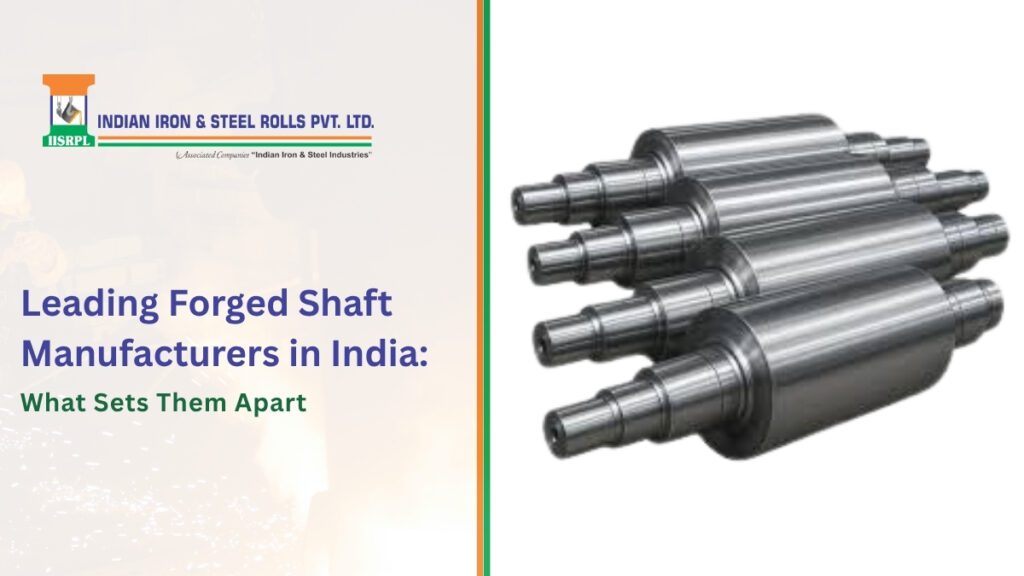
This blog explores what distinguishes leading forged shaft manufacturers in India, the manufacturing process, key quality standards, industry applications, and the factors buyers should consider when selecting a reliable supplier.
What Is a Forged Shaft?
A forged shaft is a mechanical component manufactured through the metal forging process, where heated metal billets are shaped under high compressive forces. Unlike cast or machined shafts, forged shafts possess a refined grain structure that significantly enhances their strength, toughness, fatigue resistance, and load-bearing capacity.
Forged shafts are commonly produced using:
- Carbon steel
- Alloy steel
- Stainless steel
- Nickel alloys
- Special engineering steels
These shafts are designed for applications requiring exceptional durability and long service life.
Why Forged Shafts Are Preferred Over Machined or Cast Shafts
Forged shafts offer several performance advantages:
- Higher mechanical strength
- Improved fatigue resistance
- Superior impact resistance
- Better grain flow alignment
- Reduced internal defects
- Longer operational lifespan
- Enhanced dimensional stability
- Greater reliability under heavy loads
These benefits make forged shafts the preferred choice for critical industrial equipment.
What Sets Leading Forged Shaft Manufacturers in India Apart?
1. Advanced Forging Technology
Leading manufacturers invest in modern forging presses, hydraulic presses, ring rolling mills, CNC machining centers, and automated heat treatment facilities.
These advanced technologies ensure:
- High dimensional accuracy
- Better surface finish
- Consistent mechanical properties
- Reduced material waste
- Increased production efficiency
2. High-Quality Raw Materials
Reliable manufacturers source certified raw materials from trusted steel mills.
Common grades include:
- EN8
- EN9
- EN19
- EN24
- EN31
- SAE 4140
- SAE 4340
- Stainless Steel 304
- Stainless Steel 316
- Duplex Stainless Steel
Material traceability ensures consistent product quality throughout manufacturing.
3. Strict Quality Control
Top forged shaft manufacturers implement rigorous inspection procedures during every production stage.
Typical quality checks include:
- Ultrasonic Testing (UT)
- Magnetic Particle Inspection (MPI)
- Dye Penetrant Testing (DPT)
- Hardness Testing
- Tensile Testing
- Impact Testing
- Chemical Composition Analysis
- Dimensional Inspection
These inspections help eliminate defects before delivery.
4. International Manufacturing Standards
Leading Indian manufacturers comply with globally recognized certifications, including:
- ISO 9001
- ASTM Standards
- DIN Standards
- ASME Standards
- EN Standards
- API Specifications (where applicable)
Compliance assures international customers of consistent quality.
5. Custom Manufacturing Capabilities
Every industry has unique requirements.
Experienced manufacturers offer customized forged shafts based on:
- Diameter
- Length
- Material grade
- Surface finish
- Heat treatment
- Machining requirements
- Tolerance specifications
- Drawing-based manufacturing
Custom engineering solutions reduce assembly issues and improve equipment performance.
6. Comprehensive Heat Treatment
Heat treatment significantly enhances shaft performance.
Common processes include:
- Normalizing
- Annealing
- Quenching
- Tempering
- Induction Hardening
- Stress Relieving
Proper heat treatment increases wear resistance, toughness, and fatigue strength.
7. Precision CNC Machining
After forging, shafts undergo CNC machining to achieve exact specifications.
Precision machining provides:
- Tight tolerances
- Accurate dimensions
- Improved concentricity
- Better surface finish
- Ready-to-install components
8. Competitive Pricing
Indian manufacturers offer excellent value because of:
- Efficient production systems
- Skilled workforce
- Strong raw material supply chain
- Modern manufacturing infrastructure
Customers receive premium-quality products at globally competitive prices.
9. Global Export Expertise
Many Indian forging companies export products worldwide.
Major export markets include:
- USA
- Germany
- United Kingdom
- Canada
- Australia
- UAE
- Saudi Arabia
- South Africa
- Europe
- Southeast Asia
Manufacturers provide export documentation, international packaging, and timely deliveries.
10. Engineering Support
Top manufacturers offer technical assistance throughout the project lifecycle.
Support includes:
- Material selection
- Design consultation
- Manufacturing feasibility
- Heat treatment recommendations
- Inspection reports
- Quality documentation
This engineering expertise ensures customers receive the most suitable solution.
Industries That Use Forged Shafts
Forged shafts are essential across various sectors.
Automotive
- Transmission shafts
- Drive shafts
- Axle shafts
- Crankshafts
Power Generation
- Turbine shafts
- Generator shafts
- Rotor shafts
Oil & Gas
- Pump shafts
- Compressor shafts
- Drilling equipment
Marine
- Propeller shafts
- Rudder shafts
- Engine shafts
Mining
- Crusher shafts
- Conveyor shafts
- Gearbox shafts
Cement Plants
- Kiln shafts
- Roller shafts
- Mill shafts
Steel Plants
- Rolling mill shafts
- Drive shafts
- Industrial rollers
Manufacturing Process of Forged Shafts
Leading manufacturers follow a systematic production process:
Step 1: Raw Material Selection
Certified steel billets are selected according to customer specifications.
Step 2: Heating
Billets are heated to forging temperatures using controlled furnaces.
Step 3: Forging
Hydraulic presses shape the heated metal into the desired shaft profile.
Step 4: Heat Treatment
Mechanical properties are optimized through controlled heat treatment.
Step 5: Rough Machining
Excess material is removed while preparing for finish machining.
Step 6: CNC Finish Machining
Precision machining ensures accurate dimensions and tolerances.
Step 7: Inspection
Each shaft undergoes dimensional and non-destructive testing.
Step 8: Packaging & Dispatch
Products are securely packed to prevent damage during transportation.
Factors to Consider When Choosing Forged Shaft Manufacturers in India
Before selecting a supplier, evaluate the following:
- Manufacturing experience
- Production capacity
- Material certifications
- Quality assurance systems
- Testing facilities
- CNC machining capabilities
- Heat treatment infrastructure
- Export experience
- Delivery timelines
- Customer support
Choosing an experienced manufacturer minimizes production risks and ensures long-term reliability.
Benefits of Partnering with Indian Forged Shaft Manufacturers
Working with reputable Indian suppliers offers several advantages:
- Superior product quality
- Cost-effective manufacturing
- International certifications
- Modern production facilities
- Skilled engineering teams
- Flexible customization
- Reliable delivery schedules
- Global export capabilities
- Excellent customer service
- Long-term business partnerships
Future of Forged Shaft Manufacturing in India
India’s forging industry continues to evolve through automation, smart manufacturing, advanced CNC technology, and sustainable production practices. Increasing investments in Industry 4.0, robotics, and precision engineering are enabling manufacturers to produce more complex and high-performance forged shafts for global markets.
With rising demand from renewable energy, electric vehicles, aerospace, railways, and heavy engineering sectors, India’s forged shaft manufacturers are well-positioned to remain key suppliers to industries worldwide.
Conclusion
Leading forged shaft manufacturers in India distinguish themselves through advanced technology, stringent quality control, premium raw materials, precision machining, and a commitment to customer satisfaction. Their ability to deliver customized, high-strength, and internationally compliant forged shafts has made India a preferred sourcing destination for businesses across diverse industries.
Whether your requirement is for automotive, marine, power generation, mining, or heavy industrial applications, partnering with a trusted Indian forged shaft manufacturer ensures dependable performance, cost efficiency, and long-term value. By evaluating factors such as manufacturing capabilities, certifications, quality standards, and engineering expertise, businesses can confidently select a supplier that meets their operational needs and supports sustainable growth.