Introduction
Adamite rolls are widely used in the iron and steel industry because they offer an excellent balance of hardness, wear resistance, and toughness. Positioned between cast iron and cast steel in terms of mechanical properties, adamite rolls are commonly employed in finishing and intermediate stands of hot strip mills, section mills, rail mills, and plate mills. Their ability to withstand high temperatures, heavy loads, and repeated thermal cycling makes them an essential component in modern rolling operations.
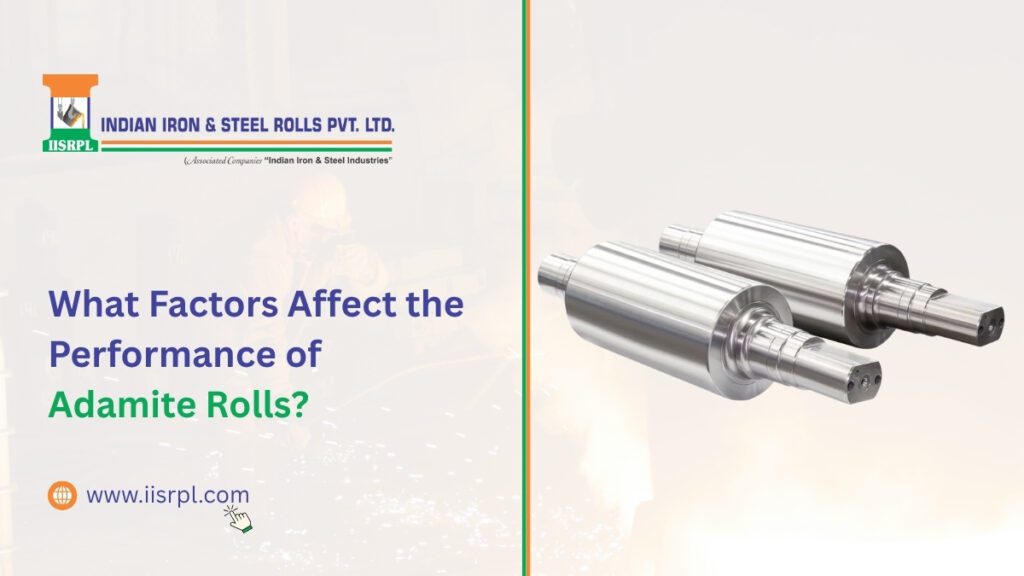
However, the performance of adamite rolls is influenced by several interconnected factors. Material composition, heat treatment, rolling conditions, cooling practices, maintenance, and operating parameters all determine the roll’s efficiency, lifespan, and the quality of the rolled product. Understanding these factors helps steel manufacturers maximize productivity while minimizing downtime and roll replacement costs.
Understanding Adamite Rolls
Adamite is a special grade of alloyed cast iron that contains a higher amount of carbon than cast steel but less than conventional cast iron. It also includes alloying elements such as chromium, nickel, molybdenum, and manganese, which improve hardness, wear resistance, and thermal stability.
The microstructure of adamite rolls typically consists of tempered martensite or bainite with finely dispersed carbides. This unique structure provides sufficient hardness for wear resistance while maintaining enough toughness to resist cracking under severe rolling conditions.
Key Factors Affecting the Performance of Adamite Rolls
1. Chemical Composition
The chemical composition is one of the most important factors affecting roll performance.
- Carbon influences hardness and carbide formation.
- Chromium increases wear resistance and oxidation resistance.
- Nickel improves toughness and thermal stability.
- Molybdenum enhances high-temperature strength and minimizes softening.
- Manganese contributes to hardenability and strength.
An optimized chemical composition ensures that the roll maintains an ideal balance between hardness and toughness.
2. Microstructure
The internal microstructure directly affects mechanical performance.
A fine and uniform distribution of carbides improves wear resistance without making the roll excessively brittle. Proper control of graphite formation and carbide morphology helps reduce crack initiation and improves overall service life.
Uniform microstructures also ensure consistent hardness across the roll barrel, resulting in stable rolling performance.
3. Heat Treatment
Heat treatment significantly influences the final properties of adamite rolls.
Processes such as:
- Normalizing
- Quenching
- Tempering
are carefully controlled to achieve the desired hardness and toughness.
Improper heat treatment may cause:
- Uneven hardness
- Residual stresses
- Reduced wear resistance
- Premature cracking
- Thermal fatigue
A well-designed heat treatment process greatly enhances roll durability.
4. Hardness
Hardness determines the roll’s ability to resist abrasion.
Higher hardness generally means:
- Better wear resistance
- Longer service life
- Improved dimensional stability
However, excessive hardness may reduce toughness and increase the risk of cracking. Therefore, manufacturers carefully select hardness levels according to the intended rolling application.
5. Rolling Temperature
Hot rolling exposes adamite rolls to continuous heating and cooling cycles.
High temperatures can lead to:
- Thermal expansion
- Surface oxidation
- Reduced hardness
- Thermal fatigue
Maintaining appropriate rolling temperatures helps minimize thermal damage and prolong roll life.
6. Cooling System
Effective cooling is essential for maintaining stable roll temperatures.
An efficient cooling system:
- Prevents overheating
- Reduces thermal stress
- Improves surface quality
- Minimizes thermal cracking
- Extends roll life
Poor cooling practices often cause uneven temperature distribution, leading to premature failure.
7. Rolling Load and Pressure
Rolling force has a direct impact on roll performance.
Excessive loads may result in:
- Plastic deformation
- Surface wear
- Fatigue cracks
- Roll spalling
Proper mill setup and load distribution reduce stress concentrations and improve roll reliability.
8. Lubrication
Although lubrication is less common in some hot rolling operations than in cold rolling, it still plays an important role where applicable.
Proper lubrication:
- Reduces friction
- Lowers operating temperatures
- Minimizes wear
- Improves surface finish
- Decreases energy consumption
Poor lubrication accelerates roll degradation.
9. Surface Finish
The quality of the roll surface directly influences the finish of rolled products.
A smooth and properly ground roll surface:
- Produces better product quality
- Reduces friction
- Minimizes localized wear
- Prevents surface defects
Regular grinding restores the roll profile and maintains consistent performance.
10. Thermal Fatigue Resistance
Adamite rolls experience repeated heating and cooling during operation.
This continuous thermal cycling causes:
- Surface checking
- Heat cracks
- Microcrack formation
- Material fatigue
Good alloy design, optimized heat treatment, and proper cooling significantly improve thermal fatigue resistance.
11. Wear Resistance
Wear resistance determines how long a roll can operate before regrinding or replacement.
Factors influencing wear include:
- Carbide content
- Hardness
- Rolling speed
- Contact pressure
- Product material
Higher wear resistance reduces production interruptions and maintenance costs.
12. Roll Maintenance
Routine maintenance has a major impact on roll performance.
Maintenance activities include:
- Surface inspection
- Crack detection
- Grinding
- Profile correction
- Hardness testing
Preventive maintenance helps identify damage early and prevents catastrophic failures.
13. Mill Operating Conditions
Operational parameters significantly influence roll life.
Important parameters include:
- Rolling speed
- Reduction ratio
- Product dimensions
- Pass schedule
- Mill alignment
Optimized operating conditions reduce mechanical stress and improve roll performance.
14. Product Material
Different steel grades place varying demands on adamite rolls.
High-strength alloys, stainless steels, and specialty products may generate:
- Higher rolling loads
- Increased abrasion
- Greater thermal stress
Selecting the appropriate roll grade for the specific product improves efficiency and durability.
15. Manufacturing Quality
The manufacturing process determines the initial quality of the roll.
Critical quality factors include:
- Casting integrity
- Solidification control
- Inclusion cleanliness
- Machining accuracy
- Heat treatment precision
- Quality inspection
High manufacturing standards result in consistent performance and fewer service failures.
Common Failure Modes of Adamite Rolls
Several failure mechanisms can reduce roll performance if operating conditions are not properly controlled.
Common failures include:
- Surface wear
- Thermal cracking
- Fire cracking
- Spalling
- Fatigue cracking
- Roll breakage
- Oxidation
- Surface roughening
Understanding these failures helps operators implement effective preventive measures.
Best Practices for Improving Adamite Roll Performance
Manufacturers can significantly improve roll life by following these practices:
- Select the appropriate roll grade for each rolling application.
- Maintain an optimized chemical composition and microstructure.
- Apply proper heat treatment procedures.
- Use efficient cooling systems.
- Monitor rolling loads and temperatures continuously.
- Perform regular grinding and surface maintenance.
- Inspect rolls periodically using non-destructive testing techniques.
- Replace damaged rolls before severe failures occur.
- Maintain proper mill alignment.
- Train operators on correct roll handling and operating procedures.
Benefits of Optimizing Adamite Roll Performance
Improved roll performance offers several advantages:
- Longer service life
- Reduced maintenance costs
- Better wear resistance
- Higher production efficiency
- Improved product surface quality
- Lower downtime
- Increased mill productivity
- Enhanced operational reliability
Conclusion
The performance of adamite rolls depends on a combination of material properties, manufacturing quality, operating conditions, maintenance practices, and rolling parameters. Factors such as chemical composition, microstructure, hardness, heat treatment, cooling efficiency, rolling load, lubrication, and regular maintenance collectively determine the roll’s durability and effectiveness. By carefully controlling these variables, steel manufacturers can maximize roll life, improve product quality, reduce operational costs, and achieve more efficient and reliable rolling mill performance. As rolling technology continues to advance, ongoing improvements in alloy design, heat treatment, and process optimization will further enhance the capabilities of adamite rolls in demanding industrial applications.