India’s Independence Day is a time to celebrate the nation’s freedom, progress, and achievements. Since 15 August 1947, India has made remarkable progress across infrastructure, manufacturing, engineering, transportation, and industrial development.
One of the most important parts of this transformation has been the growth of the Indian steel industry.
Steel has become an essential part of modern India. It is used in bridges, railways, buildings, automobiles, machinery, power projects, manufacturing facilities, and countless other applications. Supporting this growing steel industry is an equally important network of technologies and equipment—including steel rolling mills and rolling mill rolls.
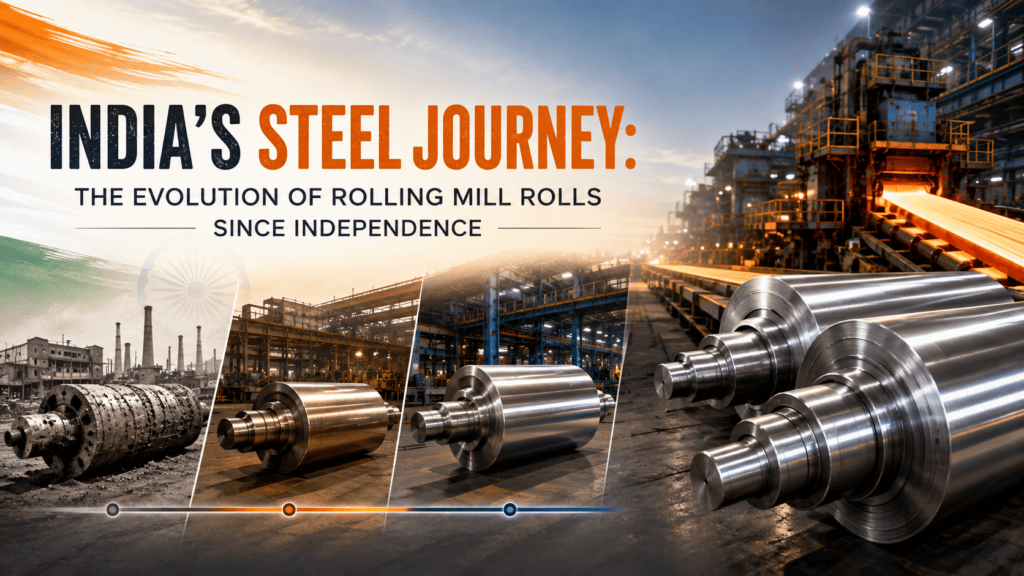
As India continues to strengthen its manufacturing capabilities, the importance of reliable and application-specific rolling mill solutions is becoming increasingly significant.
The Growth of India’s Steel Industry
When India became independent in 1947, its industrial and steelmaking capabilities were considerably smaller than they are today. Over the decades, investments in steel plants, infrastructure, engineering, and manufacturing helped establish a much stronger industrial foundation.
Today, India is one of the world’s leading steel-producing nations, with steel playing a vital role in economic and infrastructure development.
The continued expansion of construction, transportation, automobiles, engineering, energy, and manufacturing has created sustained demand for steel products.
However, producing steel is only one part of the process.
Steel must often be converted into specific shapes, sizes, and profiles before it can be used by different industries. This is where steel rolling mills play a critical role.
What Is the Role of a Steel Rolling Mill?
A rolling mill processes semi-finished steel products such as billets, blooms, and slabs by passing them through rolls.
The rolling process helps achieve the required:
- Dimensions
- Shape
- Surface characteristics
- Mechanical properties
- Product specifications
Depending on the application, rolling mills can produce products such as:
- TMT bars
- Wire rods
- Structural sections
- Profiles
- Flats
- Strips
- Other specialized steel products
The performance of the rolling process directly influences the quality and consistency of the finished product.
At the heart of this process are the rolling mill rolls.
Why Are Rolling Mill Rolls So Important?
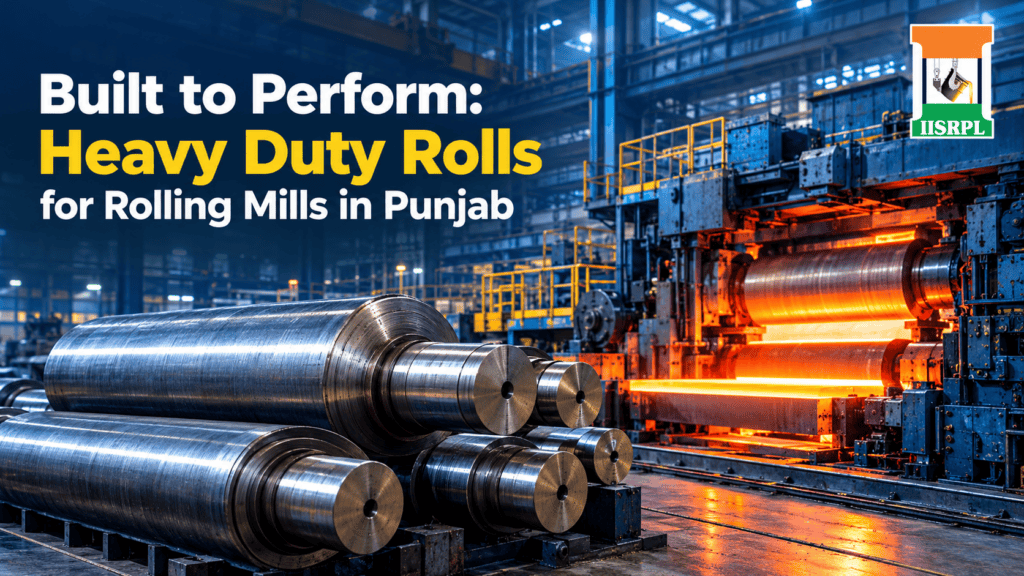
Rolling mill rolls operate in demanding industrial environments. They can be exposed to high temperatures, heavy loads, friction, repeated contact, and continuous wear.
A suitable roll must therefore provide the performance required for its specific application.
The right rolling mill roll can contribute to:
- Longer pass life
- Consistent product dimensions
- Improved surface finish
- Better wear resistance
- Reduced roll consumption
- Lower maintenance requirements
- Reduced production interruptions
- Improved rolling efficiency
This makes roll selection an important consideration for any steel rolling operation.
Rather than choosing a roll simply by size or material, rolling mills need to consider their specific operating conditions, production requirements, rolling speed, temperature, reduction, cooling conditions, and mill stand.
Evolution of Rolling Mill Roll Technology
As India’s steel industry has developed, rolling mill technology has also advanced.
Modern rolling mills operate with increasing demands for productivity, precision, consistency, and efficiency. These requirements have encouraged the development of different roll grades and technologies for specific rolling applications.
Depending on the mill and operating conditions, different types of rolls may be used, including:
Alloy Cast Steel Base Adamite Rolls & Rings
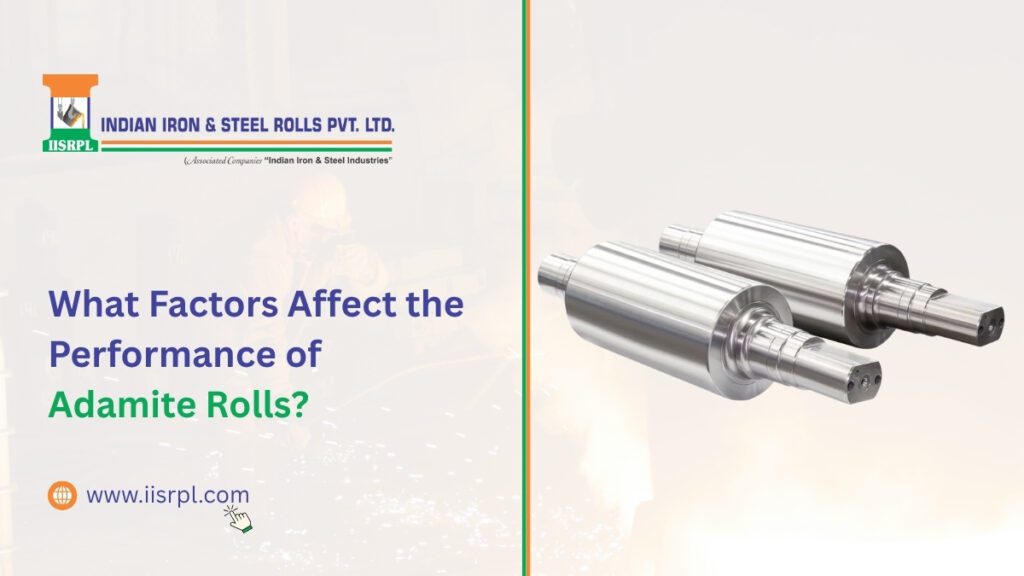
Adamite rolls are designed for applications requiring a combination of strength, wear resistance, and suitable surface performance.
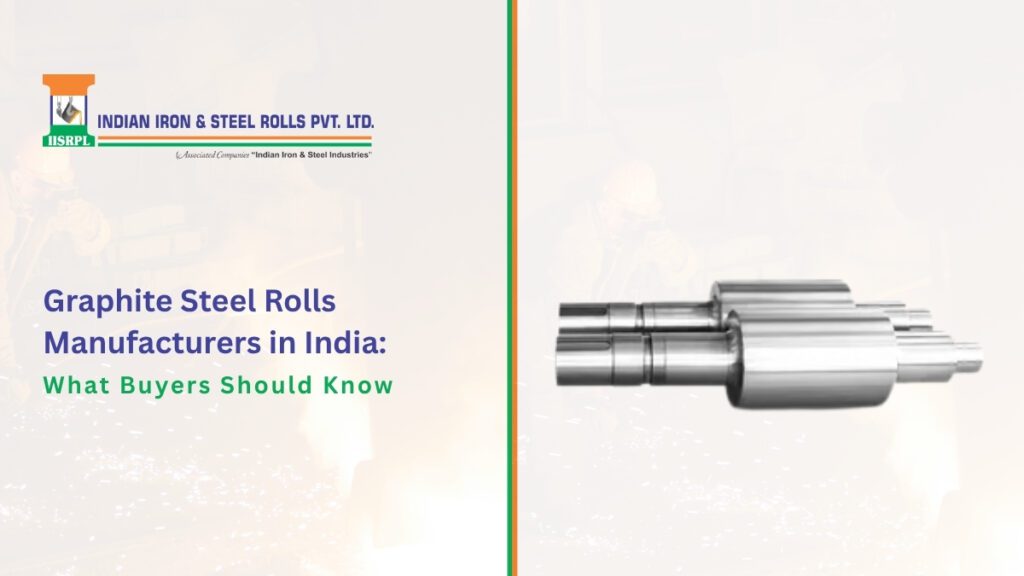
Graphitic Rolls, Reels & Rings
Graphitic roll grades can provide specific combinations of wear resistance, thermal performance, and surface characteristics for appropriate rolling applications.
S.G. Cast Iron Rolls
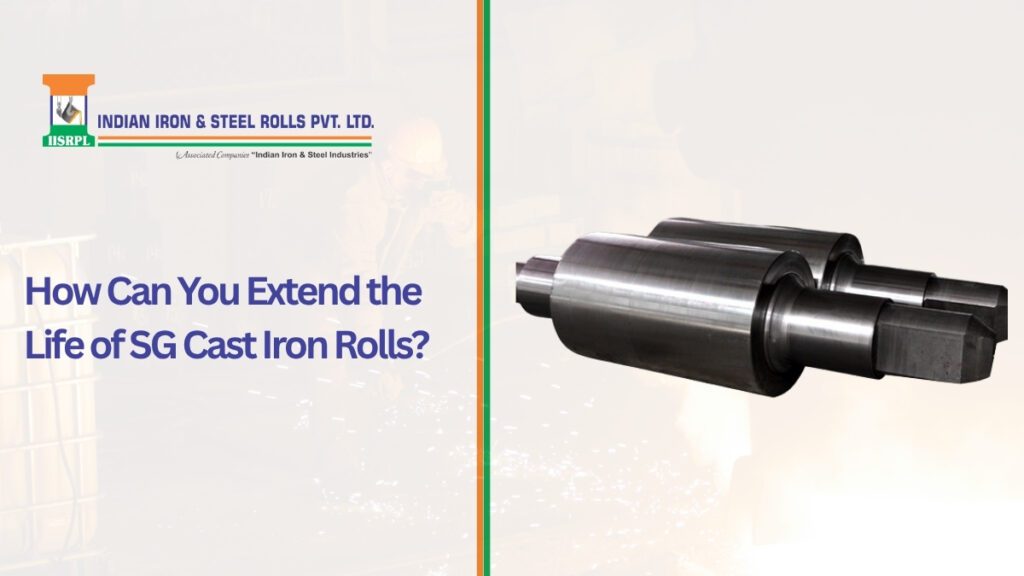
S.G. cast iron or nodular rolls are used in applications where mechanical properties and wear performance need to be balanced.
Chilled Cast Iron Rolls
Chilled cast iron rolls can be used where surface quality and suitable wear characteristics are important requirements.
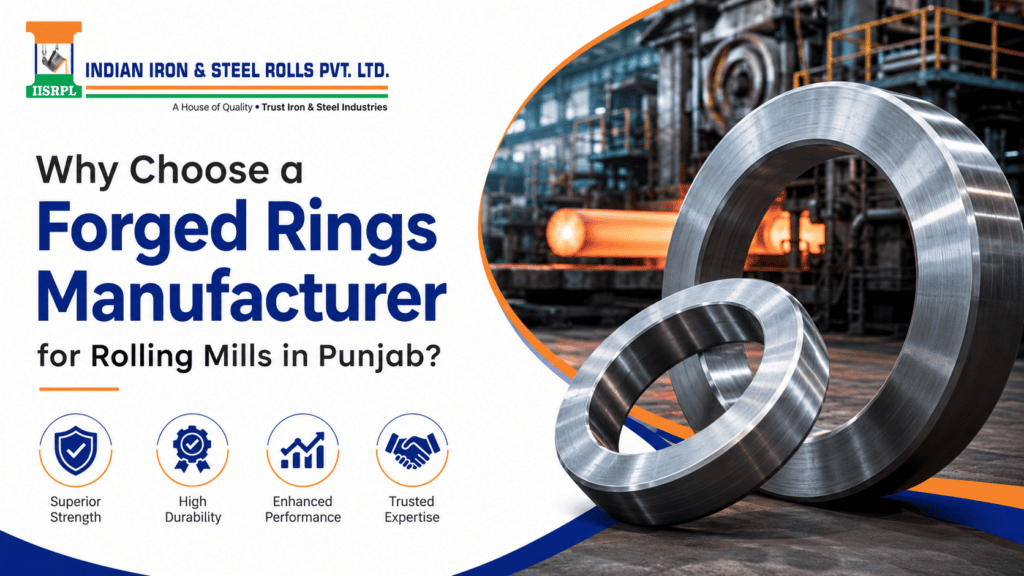
Forged Steel Rolls, Shafts & Rings
Forged steel components are suitable for demanding applications where high strength, durability, and reliability are required.
High-Speed Steel Rolls
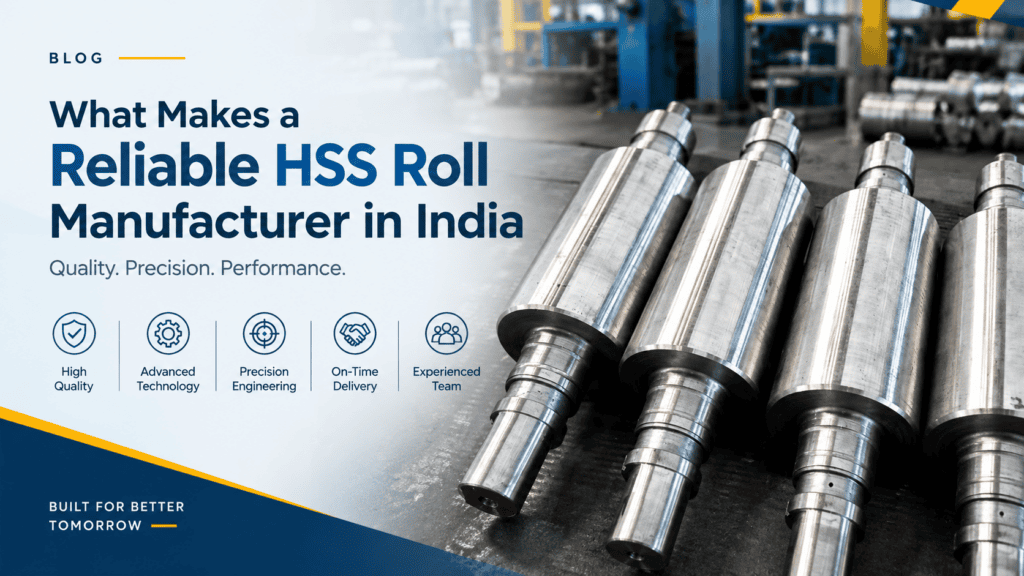
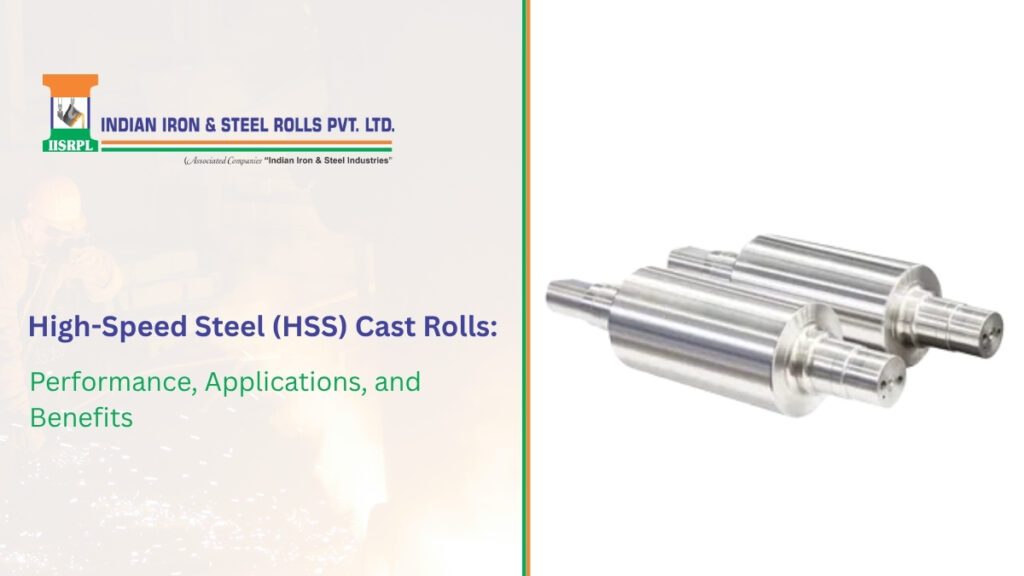
High-Speed Steel (HSS) rolls are advanced roll solutions used in demanding finishing and continuous rolling applications, including TMT, wire rod, and hot strip mills. Their wear resistance at elevated temperatures makes them suitable for high-performance rolling environments.
Tungsten Carbide Rings
Tungsten carbide rings are precision components used in applications where high wear resistance and extended service life are required.
The development of these roll technologies reflects an important principle of modern steel manufacturing: the roll must be matched to the application.
The Importance of Application-Specific Roll Selection
No two rolling mills necessarily operate under exactly the same conditions.
Factors such as:
- Rolling temperature
- Mill speed
- Reduction per pass
- Cooling conditions
- Product type
- Pass design
- Roll dimensions
- Required hardness
- Wear conditions
can influence roll performance.
For this reason, application-specific engineering is becoming increasingly important.
A properly selected and engineered rolling mill roll can help a mill achieve the required balance between durability, surface quality, dimensional accuracy, and productivity.
Supporting India’s Next Phase of Industrial Growth
India’s industrial journey is continuing.
As infrastructure development, manufacturing, transportation, construction, energy, and engineering activities expand, steel will remain an important component of the country’s development.
This growth creates opportunities not only for steel producers but also for companies involved in the technologies, components, and equipment that support steel processing.
Rolling mills will increasingly need to focus on:
Productivity + Precision + Reliability + Cost Efficiency
Achieving these objectives requires attention to every stage of the production process.
From steelmaking and casting to reheating, rolling, finishing, quality control, and distribution, each stage contributes to the final product.
Rolling mill rolls form an important part of the rolling stage and can influence the efficiency and consistency of the operation.
IISRPL: Engineering Rolling Mill Solutions
Indian Iron & Steel Rolls Private Limited (IISRPL) is a Punjab-based company focused on high-performance rolling mill rolls and related solutions.
IISRPL provides roll solutions for applications including:
- TMT Bar Rolling Mills
- Wire Rod Rolling Mills
- Section & Structural Steel Rolling Mills
- Profile Steel Rolling Mills
- Strip Rolling Mills
The company’s roll range covers approximately 300 kg to 10,000 kg, with barrel diameters ranging from approximately 300 mm to 850 mm and lengths up to 5,000 mm, according to the provided company information.
IISRPL’s product range includes:
- Alloy Cast Steel Base Adamite Rolls & Rings
- Graphitic Rolls, Reels & Rings
- S.G. Cast Iron Rolls
- Chilled Cast Iron Rolls
- Forged Steel Rolls, Shafts & Rings
- High-Speed Steel Rolls
- Tungsten Carbide Rings
Engineering for Better Rolling Performance
Effective roll performance begins with understanding the application.
Factors such as mill conditions, product requirements, roll grade, dimensions, hardness, pass design, rolling temperature, speed, and cooling conditions can all influence the performance of a roll.
IISRPL’s approach focuses on key areas including:
Roll Design
Developing roll solutions around the specific application and operating conditions.
Metallurgy
Selecting suitable roll grades and material characteristics according to the intended application.
Quality Assurance
Maintaining quality controls throughout the development and manufacturing process.
Research & Development
Working toward improvements in roll performance, wear resistance, pass life, and surface finish.
Technical Support
Helping customers identify suitable roll solutions for their individual rolling requirements.
The objective is straightforward:
Better roll performance can support better rolling performance.
From Independence to Industrial Strength
India’s journey since Independence demonstrates what can be achieved through engineering, innovation, manufacturing, and long-term industrial development.
The country’s steel industry has evolved significantly, and the technologies supporting steel production have evolved alongside it.
Rolling mill rolls may represent one component within the larger steel manufacturing ecosystem, but their performance can have an important role in the efficiency, consistency, and productivity of rolling operations.
As India moves toward the next phase of industrial growth, reliable engineering solutions will continue to support this progress.
Celebrating India’s Progress This Independence Day
Independence Day is not only an opportunity to look back at India’s achievements. It is also a reminder of the work required to build the future.
From infrastructure and transportation to manufacturing and engineering, India’s progress has been supported by millions of people and businesses working toward a stronger industrial foundation.
Steel remains an important part of that story.
And behind every steel product are the processes, technologies, equipment, engineers, and manufacturers that make its production possible.
This Independence Day, we celebrate India’s journey from the foundations established after 1947 to the advanced industrial capabilities of today.
At Indian Iron & Steel Rolls Private Limited, we are proud to contribute to India’s steel and engineering ecosystem by developing rolling mill roll solutions focused on performance, reliability, and application-specific requirements.
Happy Independence Day!
Jai Hind!
About Indian Iron & Steel Rolls Private Limited
Indian Iron & Steel Rolls Private Limited (IISRPL) is a Punjab-based company providing high-performance rolling mill rolls and related solutions for steel rolling applications. Its product range includes Adamite rolls, graphitic rolls, S.G. cast iron rolls, chilled cast iron rolls, forged steel rolls, High-Speed Steel rolls, and tungsten carbide rings.
Looking for rolling mill rolls for your specific application? Explore IISRPL’s range of roll solutions or contact the technical team to discuss your requirements.