Introduction
In today’s highly competitive metal rolling industry, manufacturers continuously seek ways to improve productivity, reduce operational costs, and maintain consistent product quality. One of the most effective solutions for achieving these goals is the use of tungsten carbide roll rings. Known for their exceptional hardness, wear resistance, and durability, tungsten carbide roll rings have become a preferred choice in wire rod mills, bar mills, and other rolling applications where performance and reliability are critical.
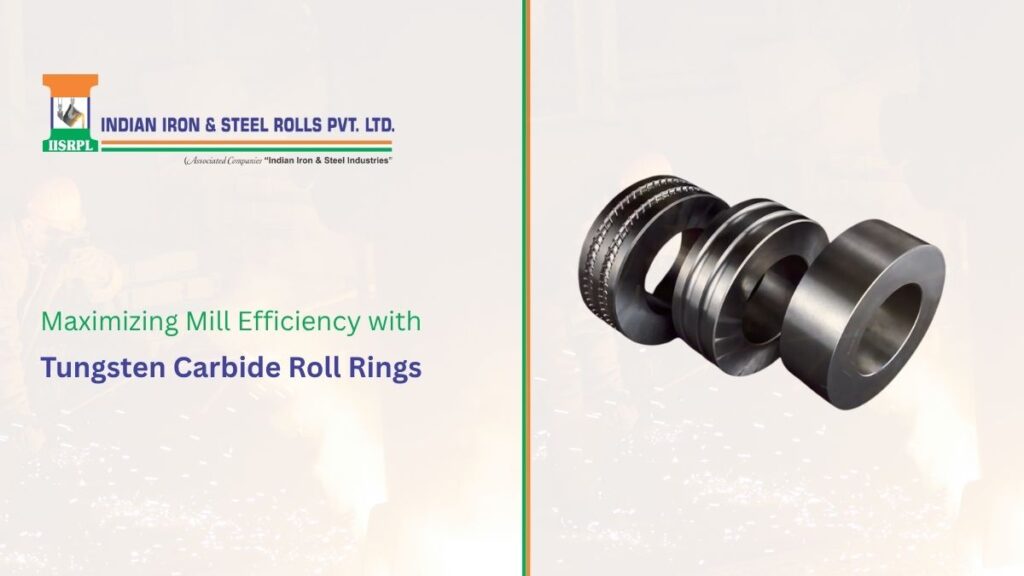
This blog explores how tungsten carbide roll rings help maximize mill efficiency, their key benefits, applications, and why they are an essential investment for modern rolling operations.
What Are Tungsten Carbide Roll Rings?
Tungsten carbide roll rings are precision-engineered rolling components manufactured from tungsten carbide, a material composed of tungsten and carbon atoms bonded together. This material is significantly harder than conventional steel and offers outstanding resistance to wear, abrasion, and deformation.
These roll rings are commonly used in:
- Wire rod mills
- Rebar production mills
- Section mills
- Finishing blocks
- Intermediate rolling stands
- High-speed rolling applications
Their ability to withstand extreme rolling conditions makes them ideal for maintaining consistent performance over extended production cycles.
Why Mill Efficiency Matters
Mill efficiency directly impacts profitability and operational success. Efficient mills produce higher-quality products while minimizing downtime, maintenance requirements, and production losses.
Key factors influencing mill efficiency include:
- Roll life and durability
- Product dimensional accuracy
- Equipment uptime
- Surface quality of rolled products
- Energy consumption
- Maintenance frequency
Any improvement in these areas can significantly enhance overall mill performance.
Key Benefits of Tungsten Carbide Roll Rings
1. Exceptional Wear Resistance
One of the most important advantages of tungsten carbide roll rings is their superior wear resistance. Traditional steel rolls gradually wear during operation, leading to dimensional inconsistencies and frequent replacements.
Tungsten carbide roll rings maintain their profile for much longer periods, allowing mills to:
- Increase production runs
- Reduce roll changes
- Maintain tighter tolerances
- Improve product consistency
This extended service life translates directly into improved operational efficiency.
2. Longer Roll Life
Compared to conventional alloy steel rolls, tungsten carbide roll rings can offer several times longer service life under similar operating conditions.
Benefits include:
- Reduced inventory requirements
- Lower replacement costs
- Less downtime for roll changes
- Improved production continuity
The longer lifespan significantly lowers the total cost of ownership despite the higher initial investment.
3. Improved Product Quality
Product quality is a critical factor in metal rolling operations. Worn rolls can produce variations in dimensions, surface defects, and inconsistencies that lead to customer complaints or rejected products.
Tungsten carbide roll rings help maintain:
- Accurate dimensions
- Superior surface finish
- Consistent profiles
- Reduced material waste
As a result, manufacturers can achieve stricter quality standards and enhance customer satisfaction.
4. Reduced Downtime
Every minute of downtime affects production output and profitability. Frequent roll replacements and maintenance interruptions can significantly reduce mill productivity.
Because tungsten carbide roll rings last longer and require fewer replacements, mills benefit from:
- Increased machine availability
- Higher production throughput
- Reduced maintenance schedules
- Better workforce utilization
This contributes directly to improved operational efficiency.
5. Enhanced High-Speed Rolling Performance
Modern rolling mills often operate at extremely high speeds to meet increasing market demand. Conventional rolls may struggle under these conditions due to excessive wear and heat generation.
Tungsten carbide roll rings offer:
- Excellent thermal stability
- High compressive strength
- Superior resistance to deformation
- Consistent performance at high speeds
This makes them particularly valuable in high-speed finishing blocks and precision rolling applications.
Applications of Tungsten Carbide Roll Rings
Wire Rod Production
Wire rod manufacturing requires exceptional dimensional accuracy and surface quality. Tungsten carbide roll rings provide stable performance throughout long production runs, ensuring consistent product specifications.
Rebar Rolling Mills
In rebar production, roll wear can affect rib geometry and dimensional accuracy. Tungsten carbide roll rings maintain profile integrity, resulting in better-quality reinforcement bars.
Section Mills
For producing structural sections and specialized profiles, precise roll geometry is essential. Tungsten carbide rings help maintain shape consistency and minimize production defects.
High-Speed Finishing Blocks
Finishing stands experience intense wear due to high rolling speeds and elevated temperatures. Tungsten carbide roll rings excel in these demanding environments, delivering reliable and long-lasting performance.
Cost Savings Through Increased Efficiency
While tungsten carbide roll rings may require a higher initial investment than traditional steel rolls, their long-term economic benefits are substantial.
Savings come from:
Lower Maintenance Costs
Fewer roll replacements reduce labor costs and maintenance expenses.
Reduced Production Interruptions
Longer roll life minimizes downtime and improves production scheduling.
Lower Scrap Rates
Improved dimensional accuracy and surface quality reduce material waste and rework.
Higher Production Output
Increased machine availability enables higher throughput and greater profitability.
Over time, these benefits often result in a significantly lower total operating cost.
Factors to Consider When Selecting Tungsten Carbide Roll Rings
To maximize performance, manufacturers should evaluate several factors when selecting roll rings:
Material Grade
Different tungsten carbide grades offer varying balances of hardness and toughness. Selecting the appropriate grade is essential for specific rolling conditions.
Rolling Application
The type of product being rolled influences ring design and material requirements.
Operating Conditions
Temperature, rolling speed, load, and lubrication conditions should be considered during selection.
Manufacturing Quality
Precision manufacturing and strict quality control ensure optimal performance and service life.
Partnering with an experienced supplier can help identify the best solution for your rolling operation.
Best Practices for Maximizing Roll Ring Performance
To achieve the greatest return on investment, mills should follow these best practices:
- Ensure proper installation and alignment.
- Monitor rolling conditions regularly.
- Maintain adequate cooling and lubrication systems.
- Conduct routine inspections.
- Use appropriate handling procedures to prevent damage.
- Replace damaged rings promptly.
Proper maintenance and operational practices can further extend service life and enhance performance.
Future Trends in Rolling Mill Technology
As steel and metal manufacturers continue to pursue greater efficiency and sustainability, the demand for advanced rolling components will continue to grow.
Emerging developments include:
- Improved carbide material formulations
- Enhanced manufacturing precision
- Smart monitoring systems for roll wear analysis
- Advanced coating technologies
- Increased automation in roll management
These innovations will further improve the performance and reliability of tungsten carbide roll rings in future rolling operations.
Conclusion
Tungsten carbide roll rings have revolutionized modern rolling mill operations by providing exceptional wear resistance, longer service life, superior product quality, and reduced downtime. Their ability to withstand demanding rolling conditions makes them an indispensable component for manufacturers seeking higher productivity and lower operating costs.
By investing in high-quality tungsten carbide roll rings and implementing proper maintenance practices, rolling mills can significantly improve efficiency, enhance product consistency, and achieve long-term profitability. As production demands continue to rise, tungsten carbide roll rings remain one of the most effective solutions for maximizing mill performance and maintaining a competitive edge in the metal manufacturing industry.