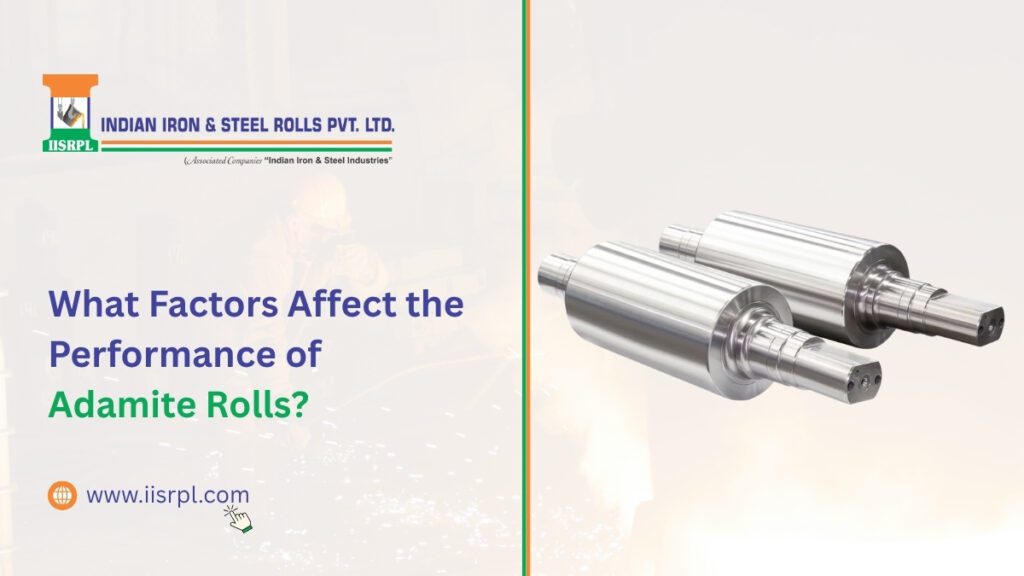
In steel rolling mills, roll performance has a direct impact on production efficiency, product quality, maintenance costs, and overall mill productivity. Adamite rolls are widely used in demanding rolling applications because they offer a useful combination of hardness, wear resistance, strength, and toughness.
However, even high-quality rolls can experience premature failure when they are exposed to unsuitable operating conditions, improper heat treatment, excessive thermal stress, or inadequate maintenance. Understanding the common causes of roll failure can help steel manufacturers improve roll performance and extend service life.
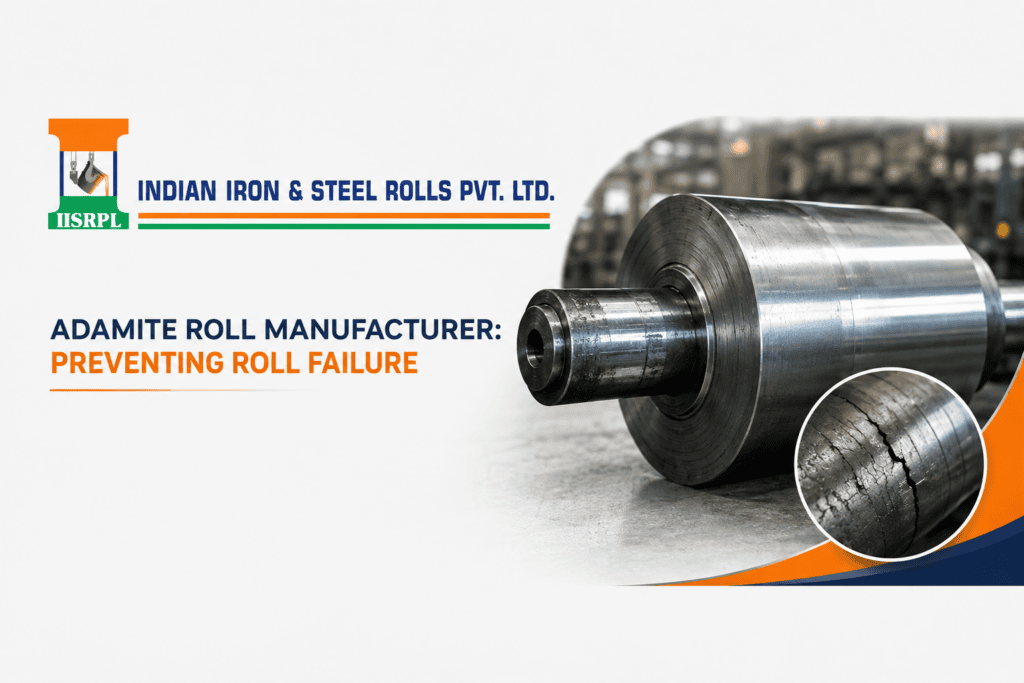
An experienced Adamite Roll Manufacturer focuses not only on producing rolls but also on controlling the metallurgical, manufacturing, and dimensional factors that influence their performance in real-world steel mill applications.
Why Adamite Roll Performance Matters
Rolling mill rolls operate under continuous mechanical and thermal stress. During operation, the roll surface comes into contact with hot steel while being subjected to high rolling loads and repeated cooling cycles.
Poor roll performance can result in:
- Increased roll wear
- Surface cracking
- Frequent roll changes
- Production downtime
- Poor surface quality
- Dimensional inconsistencies
- Higher maintenance expenses
- Increased roll consumption
For this reason, selecting the right Adamite roll supplier and maintaining suitable operating practices are both essential.
1. Excessive Roll Wear
One of the most common problems associated with rolling mill rolls is excessive wear. Continuous contact between the roll and steel gradually removes material from the roll surface.
The rate of wear can depend on several factors, including:
- Rolling temperature
- Rolling speed
- Reduction per pass
- Steel grade
- Cooling conditions
- Roll hardness
- Roll microstructure
- Mill operating parameters
When wear becomes excessive, the roll profile may change and affect the dimensional accuracy of the finished steel product.
How Can Excessive Wear Be Reduced?
An experienced Adamite Roll Manufacturer can optimize alloy composition and heat treatment to achieve an appropriate balance between hardness and toughness.
Steel mills can also reduce unnecessary wear by maintaining correct cooling practices, monitoring roll condition, and following suitable grinding and maintenance schedules.
2. Thermal Fatigue and Surface Cracking
Adamite rolls can experience repeated heating and cooling during steel rolling. These temperature fluctuations generate thermal stresses near the roll surface.
Over time, repeated thermal cycling can contribute to surface cracks or thermal fatigue.
If these cracks are not detected and managed properly, they can become deeper and potentially affect roll performance.
Preventing Thermal Damage
Proper roll material selection is important for applications involving significant thermal cycling. Manufacturing quality also plays a major role.
A professional Adamite roll manufacturer carefully controls the chemical composition, casting process, heat treatment, and final properties of the roll to improve resistance to thermal and mechanical stresses.
Appropriate cooling-water practices and controlled operating conditions can also help minimize thermal shock.
3. Improper Heat Treatment
Heat treatment has a major influence on the final properties of Adamite rolls.
If heat treatment is not properly controlled, the roll may not achieve the required hardness, toughness, or microstructure. This can result in reduced wear resistance or increased susceptibility to cracking.
The objective is not simply to make the roll extremely hard. Instead, the material should have an appropriate combination of properties for its intended application.
Why Heat Treatment Matters
A reliable Adamite Roll Manufacturer uses controlled heating and cooling cycles based on the roll grade, dimensions, and intended application.
Proper heat treatment can help establish the required metallurgical structure and hardness distribution, contributing to stable performance during service.
4. Internal Defects and Casting Problems
The casting stage is another critical factor in Adamite roll manufacturing.
Poor control during melting or casting can contribute to internal imperfections that may compromise roll reliability. Chemical composition, molten-metal quality, temperature control, solidification conditions, and casting technology all require careful attention.
Internal defects may not always be visible from the outside, which is why appropriate inspection and testing are important.
Quality Control in Adamite Roll Manufacturing
A dependable manufacturer may use techniques such as:
- Ultrasonic testing
- Hardness testing
- Chemical composition analysis
- Dimensional inspection
- Surface inspection
- Microstructural evaluation
These quality-control measures help identify potential problems before the roll reaches the steel mill.
5. Incorrect Roll Selection
Not every Adamite roll is suitable for every rolling application.
Selecting a roll based only on price or general specifications can lead to unsatisfactory performance. The correct roll should be selected according to the actual operating environment.
Important factors include:
- Mill type
- Roll dimensions
- Rolling material
- Rolling temperature
- Rolling load
- Reduction schedule
- Rolling speed
- Cooling conditions
- Required surface quality
- Expected roll campaign
An experienced Adamite Roll Manufacturer can evaluate these factors and recommend a suitable roll grade and design.
The Role of Microstructure in Adamite Roll Performance
The microstructure of an Adamite roll has a significant influence on its mechanical and wear properties.
Controlled alloying and heat treatment are used to develop the desired metallurgical structure. The relationship between the matrix, carbides, and other phases can influence hardness, wear resistance, toughness, and resistance to cracking.
This is why metallurgical expertise is an important consideration when choosing an Adamite roll supplier.
A manufacturer with strong metallurgical capabilities can develop roll grades according to the specific requirements of different steel rolling applications.
How an Adamite Roll Manufacturer Helps Prevent Failure
Preventing roll failure starts long before the roll enters the mill.
A professional manufacturer focuses on multiple stages of production.
Controlled Chemical Composition
The alloy composition must be maintained within the required specification. Variations in alloying elements can influence hardness, microstructure, wear resistance, and toughness.
Advanced Manufacturing Practices
Controlled melting, casting, heat treatment, and machining processes help produce rolls with consistent properties.
Precision Machining
Accurate machining ensures that the roll meets the required dimensions, barrel profile, and surface finish.
Comprehensive Inspection
Testing and inspection help verify that the finished roll meets the required quality standards before shipment.
Application-Based Recommendations
Manufacturers with technical experience can recommend appropriate roll grades based on actual mill conditions instead of offering a generic solution.
How Steel Mills Can Extend Adamite Roll Service Life
The manufacturer is only one part of achieving long roll life. Proper handling and operation are equally important.
Steel mills can improve roll performance by:
- Using the correct roll grade for the application
- Maintaining appropriate cooling conditions
- Monitoring roll temperature
- Avoiding unnecessary thermal shock
- Following recommended grinding practices
- Inspecting rolls regularly
- Monitoring surface defects
- Maintaining proper mill alignment
- Following appropriate roll-changing procedures
- Recording roll performance for future analysis
Regular monitoring can help identify changes in roll condition before they develop into major problems.
Why Roll Quality Should Be More Important Than Initial Price
When purchasing industrial rolls, focusing exclusively on the initial purchase price can be misleading.
A low-cost roll that requires frequent replacement may ultimately cost more because of:
- Increased downtime
- Additional roll changes
- Higher grinding requirements
- Reduced productivity
- Increased maintenance
- Higher roll consumption
A properly manufactured high-performance Adamite roll may provide better value over its operating life.
Therefore, steel mills should consider total cost of ownership when evaluating an Adamite roll manufacturer or supplier.
Choosing the Right Adamite Roll Manufacturer
When selecting a manufacturer, steel producers should consider more than production capacity.
Look for a manufacturer that offers:
- Proven experience in Adamite roll manufacturing
- Strong metallurgical expertise
- Consistent raw-material control
- Controlled heat treatment
- Precision machining
- Reliable inspection procedures
- Application-specific roll grades
- Technical support
- Consistent product quality
- After-sales assistance
A manufacturer that understands the operating environment of steel rolling mills can provide more than a finished product—it can provide a roll solution designed around performance requirements.
Conclusion
Roll failure can have a significant impact on steel mill productivity and operating costs. Excessive wear, thermal fatigue, improper heat treatment, casting defects, and incorrect roll selection are among the factors that can reduce the service life of Adamite rolls.
Choosing a reliable Adamite Roll Manufacturer is therefore an important step toward achieving consistent roll performance. From alloy selection and casting to heat treatment, machining, and inspection, every stage of manufacturing contributes to the final quality of the roll.
At the same time, proper mill operation, cooling, maintenance, and regular inspection are essential for maximizing service life.
By combining high-quality Adamite rolls with application-specific manufacturing and appropriate operating practices, steel rolling mills can work toward improved productivity, reduced downtime, and more consistent production performance.
Frequently Asked Questions
What is an Adamite roll?
An Adamite roll is a specialized rolling mill roll designed to provide a balance of hardnss, wear resistance, strength, and toughness for demanding steel rolling applications.
Why do Adamite rolls fail?
Common causes include excessive wear, thermal fatigue, surface cracking, improper heat treatment, internal defects, unsuitable roll selection, and unfavorable operating conditions.
How can Adamite roll life be increased?
Correct roll selection, controlled cooling, proper grinding, regular inspection, suitable operating conditions, and quality manufacturing can all contribute to longer roll service life.
What should I look for in an Adamite roll manufacturer?
Consider manufacturing experience, metallurgical expertise, quality-control systems, heat-treatment capabilities, machining accuracy, testing procedures, and the ability to provide application-specific solutions.
Are all Adamite rolls suitable for every steel mill?
No. Roll grade and design should be selected according to the mill configuration, rolling conditions, steel grade, temperature, load, cooling system, and other operating requirements.