Introduction
Chilled cast iron rolls play a crucial role in modern manufacturing, especially in rolling mills used for processing metals. Known for their exceptional hardness and wear resistance, these rolls are widely used in industries where durability and surface finish are critical. This blog explores the properties, applications, and key advantages of chilled cast iron rolls, helping you understand why they are a preferred choice in industrial operations.
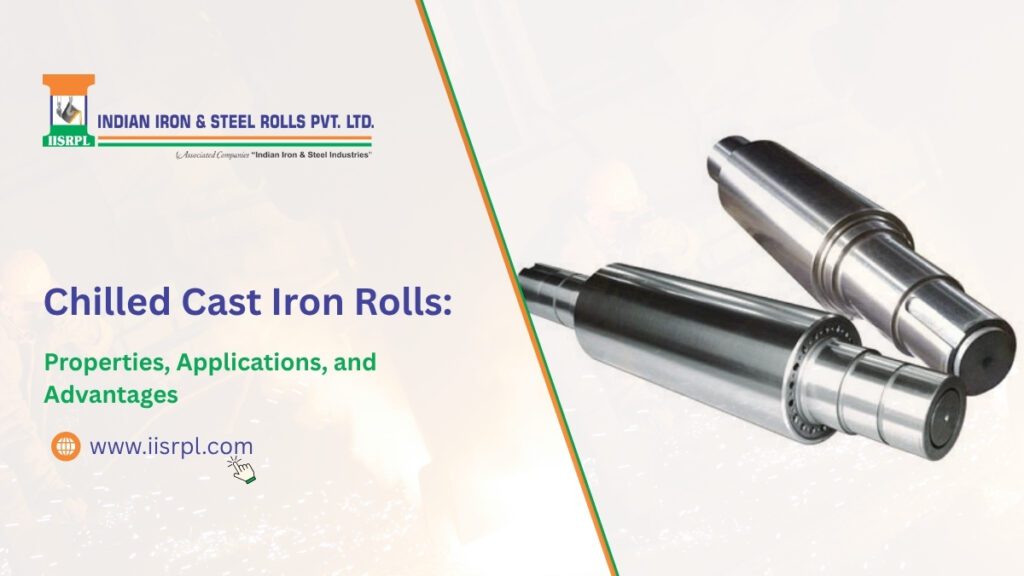
What Are Chilled Cast Iron Rolls?
Chilled cast iron rolls are produced by rapidly cooling (or “chilling”) the outer surface of molten iron during casting. This process creates a hard, wear-resistant outer layer (known as the chilled layer), while the inner core remains softer and tougher. This unique combination ensures both durability and resistance to mechanical stress.
Key Properties of Chilled Cast Iron Rolls
1. High Surface Hardness
The chilling process results in a very hard outer surface, which enhances resistance to wear and abrasion. This makes the rolls ideal for continuous and heavy-duty operations.
2. Excellent Wear Resistance
Due to the presence of carbides in the chilled layer, these rolls can withstand prolonged use without significant surface degradation.
3. Good Strength and Toughness
While the surface is extremely hard, the core remains relatively softer, providing the necessary toughness to absorb shocks and prevent breakage.
4. Smooth Surface Finish
Chilled cast iron rolls are capable of producing high-quality surface finishes on processed materials, making them suitable for precision applications.
5. Thermal Stability
These rolls perform well under high temperatures, maintaining their mechanical properties even in demanding environments.
Manufacturing Process
The production of chilled cast iron rolls involves carefully controlled casting techniques:
- Molten iron is poured into a mold with a metallic (chill) surface.
- Rapid cooling occurs at the outer layer, forming a hard white cast iron structure.
- The inner portion cools more slowly, forming grey cast iron with better toughness.
- Heat treatment processes may be applied to enhance performance characteristics.
This controlled cooling process is key to achieving the desired balance between hardness and strength.
Applications of Chilled Cast Iron Rolls
1. Rolling Mills
These rolls are extensively used in rolling mills for shaping and processing metals such as steel and aluminum.
2. Sheet and Strip Production
They help produce smooth and uniform metal sheets with excellent surface quality.
3. Flour and Grain Milling
Chilled cast iron rolls are also used in milling industries for grinding grains due to their durability and consistent performance.
4. Rubber and Plastic Processing
They are used in calendering machines for processing rubber and plastic materials.
Advantages of Chilled Cast Iron Rolls
1. Long Service Life
Their high wear resistance ensures a longer operational lifespan, reducing replacement frequency.
2. Cost-Effective
Although initial costs may be higher, their durability leads to lower maintenance and operational costs over time.
3. Improved Product Quality
They produce smoother and more consistent surfaces, enhancing the quality of finished products.
4. High Efficiency
Reduced downtime and consistent performance contribute to improved productivity in industrial processes.
5. Versatility
These rolls can be used across multiple industries, making them highly adaptable.
Limitations to Consider
While chilled cast iron rolls offer many benefits, they also have some limitations:
- They can be brittle under extreme impact conditions.
- Not suitable for applications requiring deep penetration of hardness.
- Require careful handling and maintenance to prevent surface damage.
Conclusion
Chilled cast iron rolls are an essential component in various industrial applications, offering a perfect balance of hardness, durability, and performance. Their ability to withstand wear while maintaining structural integrity makes them a valuable asset in rolling mills and other processing industries. By understanding their properties, applications, and advantages, businesses can make informed decisions and optimize their manufacturing processes.