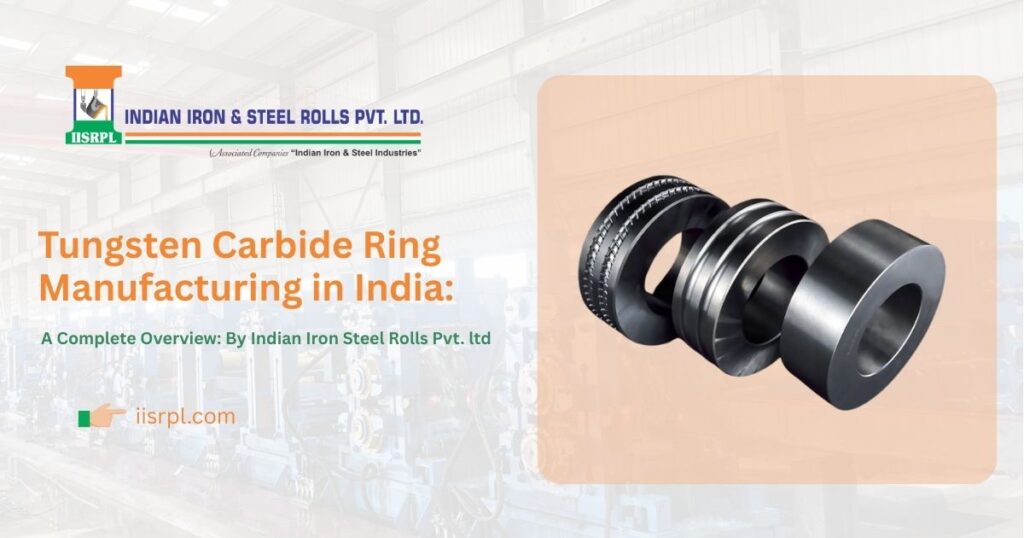
In today’s advanced steel processing industry, the demand for high-performance, wear-resistant, and long-lasting rolling components has never been higher. Among the most critical tools in modern rolling mills are tungsten carbide rings, known for their unmatched strength, heat resistance, and superior lifespan. As steel plants across the nation upgrade their technologies, the role of Tungsten Carbide Ring Manufacturers in India becomes increasingly vital in ensuring consistent rolling quality and mill productivity.
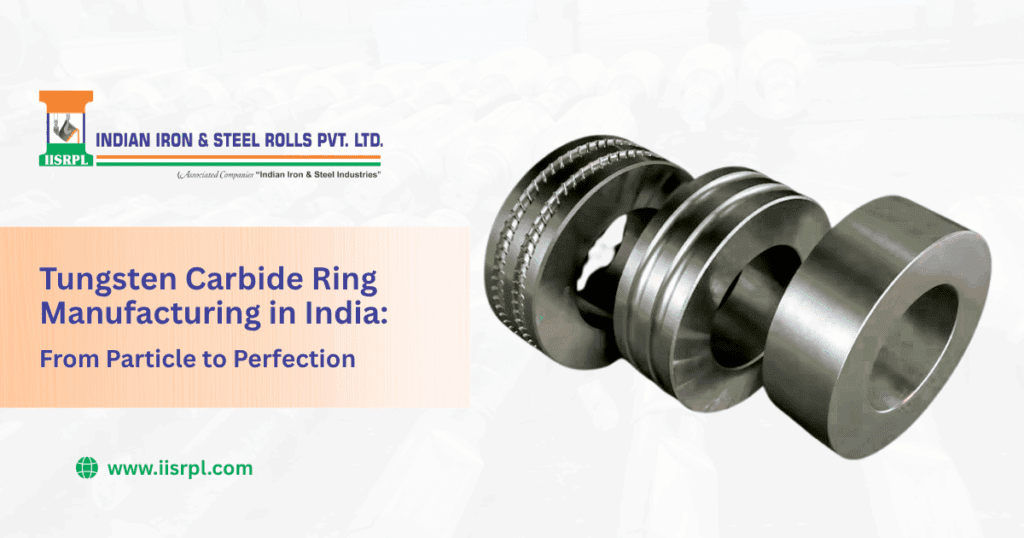
This blog takes you inside the world of tungsten carbide ring manufacturing — from micro-particles of carbide to precision-finished rings engineered for intense rolling applications.
Understanding Tungsten Carbide: The Backbone of Modern Rolling
Tungsten carbide is a compound of tungsten and carbon, pressed and sintered into an extremely dense and hard material. It is much harder than steel and retains its strength even under extreme heat.
This makes it ideal for rolling applications such as:
- Wire rod rolling mills
- Bar and rebar rolling mills
- Strip mills
- Section mills
Industries choose tungsten carbide rings for their durability, resistance to deformation, and long working life — significantly reducing roll changes and maintenance downtime.
The Journey: From Particle to Perfection
1. Micro-Particle Selection
The journey begins with selecting high-purity carbide particles and cobalt powder. The ratio between tungsten carbide and cobalt binder determines the ring’s performance — toughness, hardness, and resistance to abrasion.
2. Mixing & Formulation
Powders are blended in controlled proportions to create a uniform mixture. This step is crucial because even minor variations can impact the ring’s performance in rolling mills.
3. Pressing & Forming
The powder mix is compacted under high pressure into a “green form.” In this stage, the material is shaped into the rough geometry of the ring.
4. Sintering
During sintering, the compacted rings are exposed to extremely high temperatures (1400–1500°C).
This process fuses the carbide particles into a dense, solid mass — transforming it from a fragile shape into a high-strength industrial component.
5. CNC Machining & Grinding
Ultra-precise machining tools shape the rings to their final dimensions.
Grinding ensures the correct:
- Diameter
- Surface finish
- Roundness
- Tolerance
This step defines the ring’s rolling performance.
6. Final Quality Checks
Each ring undergoes:
- Hardness testing
- Density evaluation
- Crack & flaw inspection
- Dimensional accuracy checks
Only flawless rings make it to the rolling mill floor.
Applications Across Rolling Mills in India
1. Tungsten Carbide Rings for Wire Rod Rolling Mills
Wire rod mills demand high-speed rolling and consistent surface finish. Tungsten carbide rings excel in:
- Withstanding extreme rotational speeds
- Maintaining hardness at elevated temperatures
- Delivering smooth and precise wire rods
Their long life makes them ideal for continuous wire rod rolling operations.
2. Tungsten Carbide Rings for Bar Rolling Mills in Punjab
Punjab is home to one of India’s most active steel manufacturing clusters.
Rolling mills in this region prefer tungsten carbide rings for bar and TMT rolling because they provide:
- Reduced roll changes
- Better dimensional accuracy
- High wear resistance
- Stable performance during thermal shocks
The durability of carbide rings lowers production costs and increases mill efficiency.
Why Indian Manufacturers Lead the Market
Tungsten Carbide Ring Manufacturers in India have evolved rapidly, adopting cutting-edge machinery, powder metallurgy techniques, and global quality standards. Key strengths include:
- Advanced sintering technology
- Precision CNC machining
- High-quality raw materials
- R&D-driven engineering
- Custom ring designs for various rolling needs
Punjab, in particular, has emerged as a major hub for carbide ring manufacturing due to its established steel ecosystem and skilled industrial workforce.
Benefits of Tungsten Carbide Rings
1. High Wear Resistance
Tungsten carbide rings last much longer than steel or cast iron rolls because they resist abrasion and friction effectively. This helps mills reduce frequent roll replacements.
2. Excellent Heat Stability
They maintain hardness and strength even at high rolling temperatures, ensuring consistent performance during continuous operations.
3. Reduced Downtime
Because carbide rings have a long lifespan, mills experience fewer roll changes, which increases production time and overall efficiency.
4. Better Dimensional Accuracy
These rings hold their shape and size throughout rolling, helping achieve uniform bar and wire rod dimensions with smooth surface quality.
5. Cost-Effective in Long Term
Although initially more expensive, carbide rings reduce maintenance, downtime, and scrap, lowering the total cost per ton.
6. Ideal for High-Speed Rolling
Tungsten carbide is extremely strong and stable, making it perfect for high-speed wire rod and bar rolling mills.
7. Enhanced Productivity for Mills in Punjab
Rolling mills in Punjab benefit from longer ring life, consistent performance, and higher output, especially for bar and TMT production.
The Future of Tungsten Carbide Ring Manufacturing in India
With India’s steel production accelerating, rolling mills are shifting towards advanced, energy-efficient, and maintenance-friendly technologies. Tungsten carbide rings fit perfectly into this future. Manufacturers are now focusing on:
- Nano-structured carbide formulations
- Enhanced binding agents
- Coated ring surfaces
- AI-based quality inspection
The goal is simple — to produce rings that deliver longer performance cycles while reducing operational costs.
Conclusion
From carefully refined carbide particles to meticulously machined final rings, the journey of tungsten carbide rings represents the highest level of metallurgical craftsmanship. As demand grows across the steel sector, Tungsten Carbide Ring Manufacturers in India continue to push boundaries with innovation and precision.
Whether used in wire rod rolling mills or bar rolling mills in Punjab, tungsten carbide rings have become the preferred choice for steel plants aiming for superior performance, consistency, and long-term value.
FAQs
1. Why are tungsten carbide rings used in rolling mills?
They offer exceptional hardness, wear resistance, and long service life — ideal for high-speed rolling.
2. Are carbonate rings better than steel rolls?
Yes, tungsten carbide rings last longer, withstand higher temperatures, and reduce downtime.
3. Do tungsten carbide rings work for wire rod rolling mills?
Absolutely. Their strength and heat stability make them perfect for continuous wire rod rolling.
4. Where are carbide ring manufacturers located in India?
Punjab is one of the leading hubs, along with Maharashtra and Gujarat.
5. Can tungsten carbide rings be customized?
Yes. Manufacturers offer custom sizes, hardness levels, and geometries based on mill requirements.