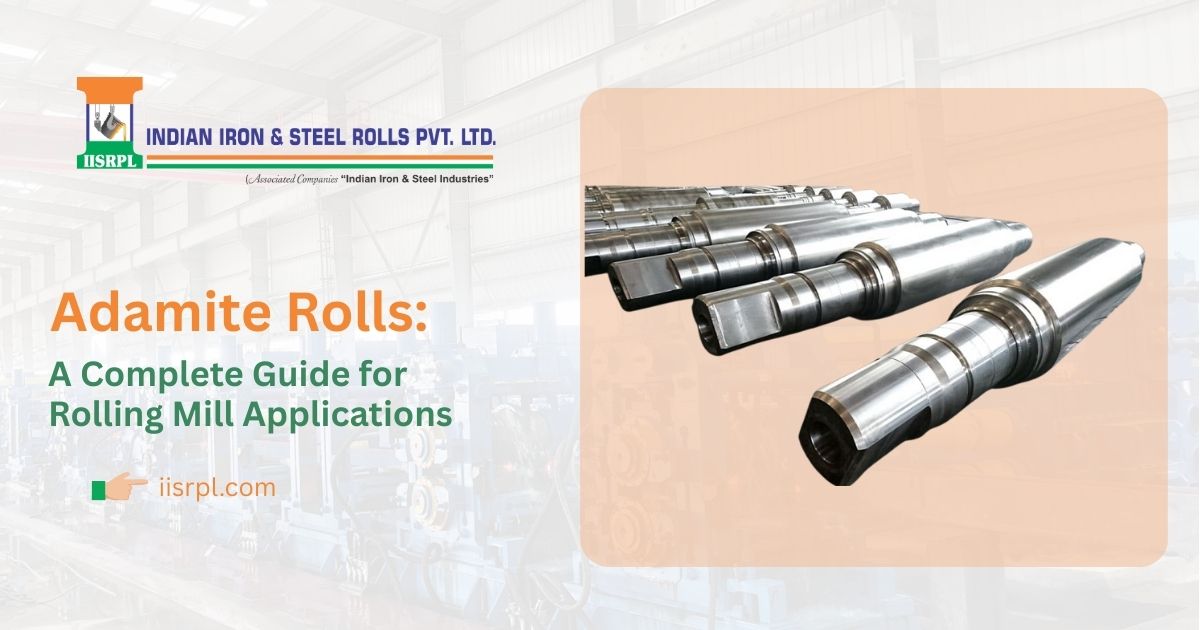
In the steel rolling industry, the performance of rolling mill rolls directly impacts product quality, productivity, and operational cost. Among various roll grades used today, Adamite Rolls have earned a strong reputation for their balanced combination of strength, wear resistance, and toughness. These rolls are widely used across section mills, bar mills, and structural rolling applications where consistent performance is critical.
This guide explains what Adamite rolls are, how they are made, their key advantages, and where they are commonly used in rolling mills.
What Are Adamite Rolls?
Adamite rolls are alloy cast steel rolls with a microstructure that lies between cast steel and cast iron. They typically contain a controlled amount of carbon and alloying elements, giving them higher hardness than cast steel while maintaining better toughness than traditional cast iron rolls.
Because of this balanced composition, Adamite rolls are especially suitable for rolling operations that demand both strength and resistance to surface wear.
Manufacturing Process of Adamite Rolls
The manufacturing of Adamite rolls involves a carefully controlled process to ensure uniform quality and long service life:
- Raw Material Selection
High-quality steel, carbon, and alloying elements are selected to achieve the desired hardness and mechanical strength. - Melting & Alloying
The materials are melted in advanced furnaces and alloyed precisely to obtain the required chemical composition. - Casting
The molten metal is poured into specially designed molds to form the roll body with controlled solidification. - Heat Treatment
Heat treatment improves hardness, wear resistance, and internal strength while minimizing residual stresses. - Machining & Finishing
Rolls are machined to precise dimensions and surface finish to ensure accurate rolling performance. - Quality Inspection
Each roll undergoes dimensional checks, hardness testing, and surface inspection before dispatch.
Key Features of Adamite Rolls
Adamite rolls are preferred by rolling mills due to the following features:
- Good Wear Resistance – Suitable for medium to heavy rolling loads
- High Mechanical Strength – Resists cracking and breakage
- Stable Performance – Maintains consistent shape during rolling
- Longer Roll Life – Reduces roll change frequency
- Cost-Effective – Balanced performance at a reasonable cost
Applications of Adamite Rolls in Rolling Mills
Adamite rolls are widely used in various rolling mill applications, including:
- Section rolling mills
- Bar and light structural mills
- Intermediate and roughing stands
- Angle, channel, and beam rolling
- Medium-duty hot rolling operations
Their versatility makes them a reliable choice for mills looking to balance productivity and durability.
Advantages Over Other Roll Grades
Adamite rolls offer several performance advantages when compared to traditional cast iron and basic cast steel rolls, making them suitable for demanding rolling mill operations.
Enhanced Wear Resistance
Adamite rolls provide better wear resistance than cast steel rolls, helping maintain roll profile and surface quality over extended rolling cycles.
Higher Toughness
Compared to high-carbon cast iron rolls, Adamite rolls offer superior toughness, reducing the risk of cracking and premature failure under heavy loads.
Improved Surface Damage Resistance
The balanced microstructure helps resist surface defects such as spalling and thermal fatigue, ensuring consistent rolling performance.
Stable Performance Under Variable Loads
Adamite rolls perform reliably under fluctuating rolling pressures and temperatures, making them ideal for intermediate and roughing stands.
Choosing the Right Adamite Rolls for Your Mill
Selecting the right Adamite roll grade is essential to achieve optimal performance and longer service life in rolling mills.
Rolling Conditions
Rolling temperature, load intensity, and speed should be evaluated to select a roll grade that can withstand operational stresses.
Product Type & Section Size
Different products and section profiles require specific roll hardness and strength to maintain dimensional accuracy.
Surface Finish Requirements
The required surface quality of the rolled product influences roll material selection and finishing specifications.
Roll Life & Maintenance Goals
Desired roll life and maintenance intervals should be considered to balance productivity and operational cost.
Manufacturer Expertise & Quality Standards
Choosing an experienced manufacturer with strict quality control ensures consistent performance and reduced downtime.
Choosing the right grade ensures optimal performance and reduced downtime.
Conclusion
Adamite rolls continue to play a vital role in modern rolling mill operations due to their strength, wear resistance, and reliability. Their balanced properties make them an ideal solution for section and bar rolling mills seeking consistent output and long-term value. By selecting high-quality Adamite rolls from a trusted manufacturer like IISRPL (Indian Iron & Steel Rolls Pvt. Ltd.), rolling mills can achieve improved productivity, reduced maintenance, and superior rolled product quality.
FAQs: Adamite Rolls
1. What makes Adamite rolls different from cast iron rolls?
Adamite rolls offer better toughness and strength while still maintaining good wear resistance.
2. Are Adamite rolls suitable for hot rolling mills?
Yes, they are widely used in hot rolling, especially in section and bar mills.
3. Do Adamite rolls have a long service life?
When properly manufactured and maintained, Adamite rolls provide a longer operational life.
4. Can Adamite rolls be customized?
Yes, manufacturers can customize composition, hardness, and dimensions based on mill requirements.
5. Where are Adamite rolls commonly used?
They are commonly used in section mills, bar mills, and intermediate rolling stands.